

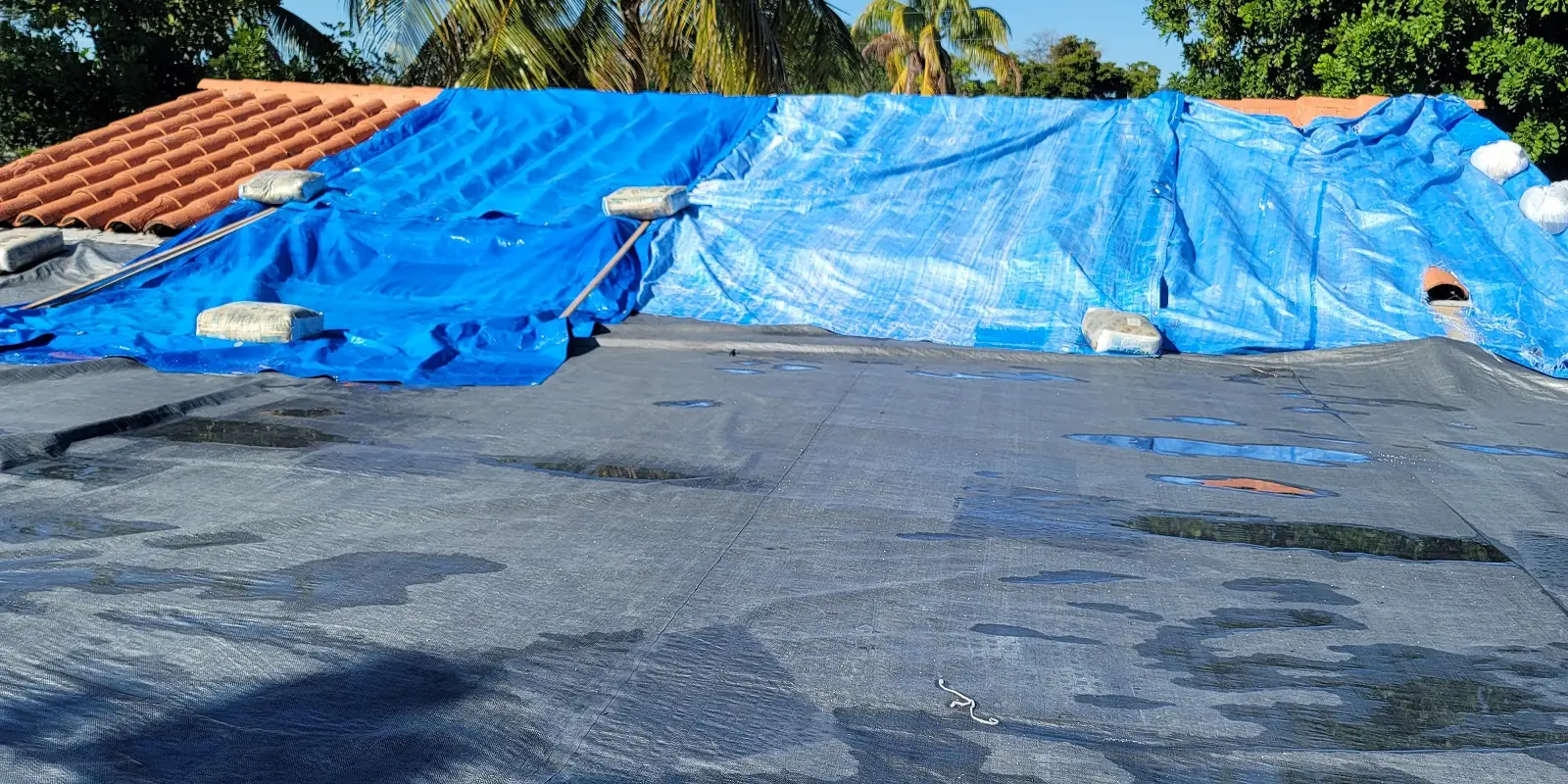
Immediate Emergency Protocol: What Happens When You Call
When you call or text our 24/7 emergency dispatch line, our emergency crew follows a disciplined rapid-response sequence:
You speak directly with an operations supervisor. We determine your building type, leak severity, roof accessibility, and safety conditions before dispatching the nearest field crew.
Our crews arrive in fully outfitted emergency service trucks stocked with heavy commercial-grade poly tarps, batten strips, polyurethane sealants, fast-cure patches, and safety harnesses.
We mechanically secure damaged areas to prevent tarps from blowing off in lingering high winds. On flat commercial roofs, we clear clogged scuppers and apply immediate mastic or self-adhering membrane seals over open puncture points.
Before securing temporary protection, our crews photograph the exact point of wind uplift, tile displacement, or membrane tearing, providing date-stamped visual proof for your insurance adjuster.
Your Legal Duty to Mitigate Under Florida Insurance Policies
Every commercial and residential property insurance policy in Florida includes a mandatory "Duties After Loss" clause. This clause requires the policyholder to take reasonable, timely steps to protect the property from further damage.
If a homeowner or building manager notices a leak but allows rain to continue pouring inside for days without tarping, the insurance company's forensic adjuster can claim that resultant drywall mold, ceiling collapse, or ruined flooring was caused by owner negligence rather than the storm itself. Hiring a licensed contractor to dry-in the building immediately creates a documented paper trail proving you fulfilled your policy obligations.