

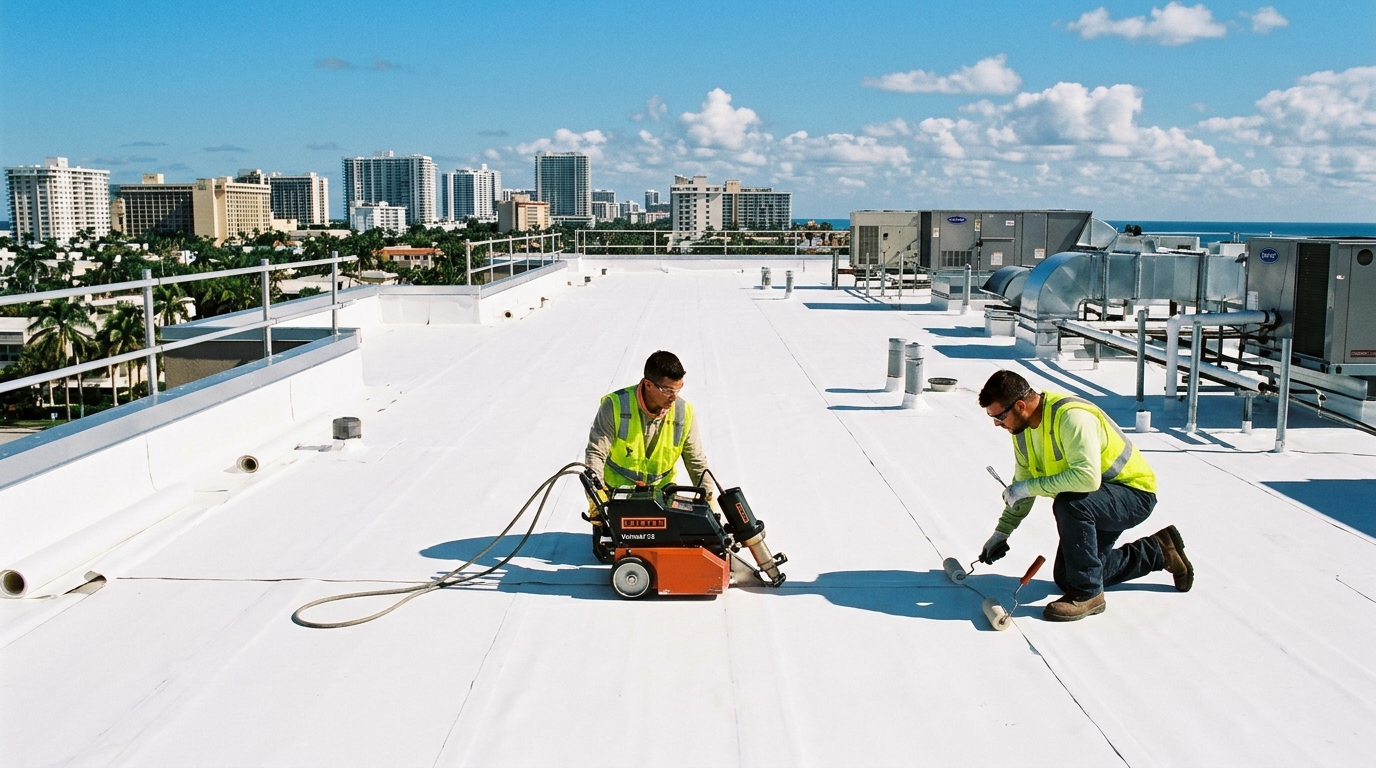
Why TPO Single-Ply Dominates Commercial Roofing in Florida
Over the last two decades, Thermoplastic Polyolefin (TPO) has become the preferred choice for commercial low-slope and flat roofs across South Florida. The engineering advantages over older tar-and-gravel or black EPDM rubber systems are compelling:
- Molecular Heat-Welded Seams: Unlike EPDM or modified bitumen, which rely on adhesive glue or tape that degrades in Florida humidity, TPO seams are fused together using 1,000°F automated hot-air welding equipment. The resulting seam is chemically stronger than the membrane itself.
- Extreme Solar Reflectance (Energy Savings): Bright white TPO reflects over 85% of solar thermal energy, lowering commercial rooftop surface temperatures from 160°F down to 90°F. This drastically reduces the workload on rooftop HVAC chillers.
- Chemical & Microbial Resistance: TPO naturally resists algae growth, bird waste, standing ponding water, and airborne commercial pollutants common in coastal urban environments.
Restoration Coatings: The Cost-Effective Alternative to Tear-Off
When a commercial flat roof reaches 15 to 20 years of age, facility managers frequently assume an expensive full tear-off is the only option. However, if the underlying insulation core is dry and structurally sound, a fluid-applied high-solids silicone coating system can restore the roof to like-new condition at 40% to 60% less cost.
Key advantages of commercial silicone restorations:
- Zero Tenant Disruption: No loud tear-off machinery, zero falling debris, and no open-roof exposure during Florida rainy season.
- Seamless Monolithic Barrier: Liquid silicone cures into a joint-free, rubber-like waterproof sheet that permanently resists ponding water.
- Tax Depreciation Benefits: Under IRS Section 179 and current tax guidelines, restorative roof coatings are frequently classified as commercial maintenance expenses, allowing businesses to deduct 100% of project costs in year one.