 PEDESTRIAN TRAFFIC
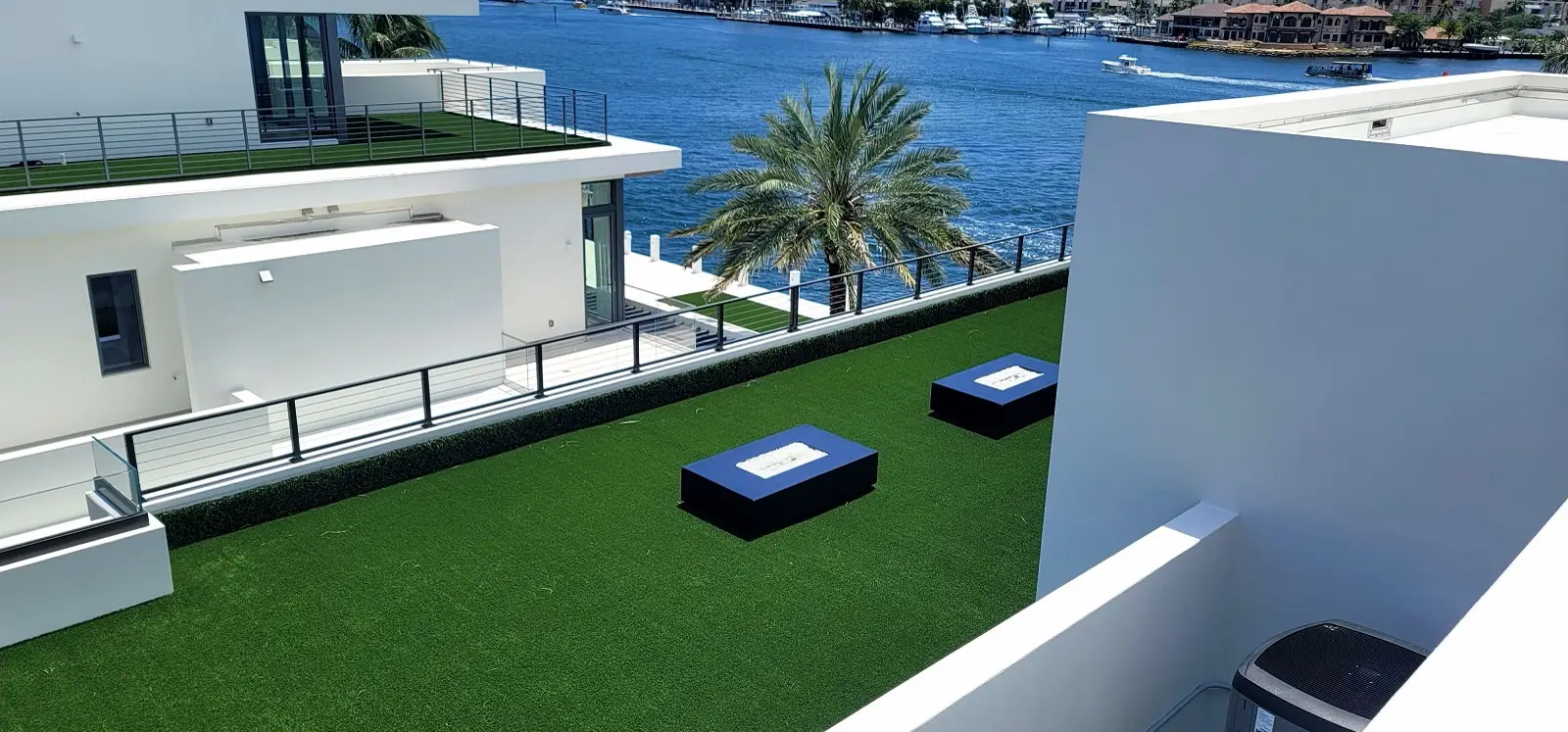
BALCONY MEMBRANES
Balconies & Elevated Decks
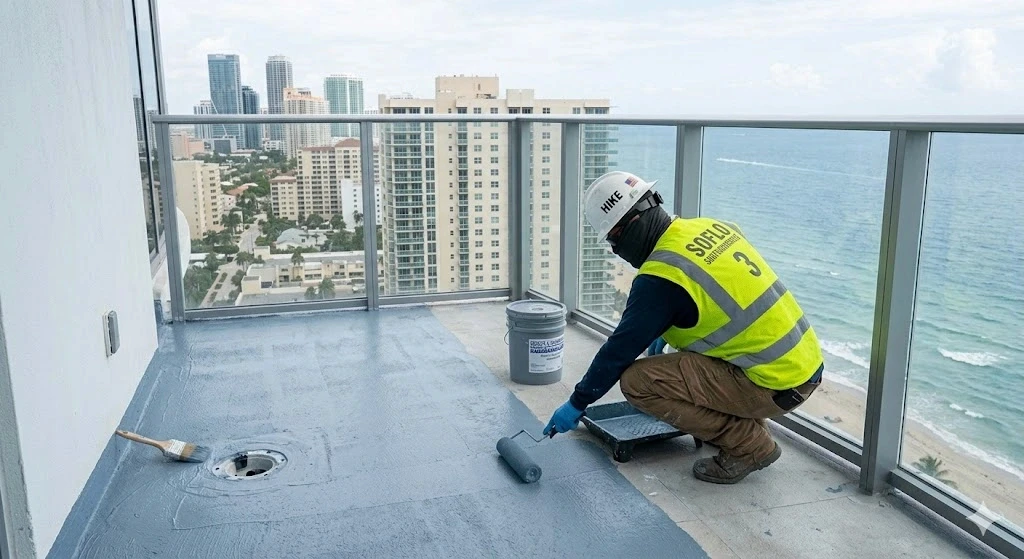
Multi-layer polyurethane traffic membranes with perimeter cant strips and code-approved drip flashing.
Request Detailed Quote →Failed roof drains are one of the top causes of roof leaks and ponding water damage. We repair, reseal, and waterproof drains the right way — so they actually do their job.
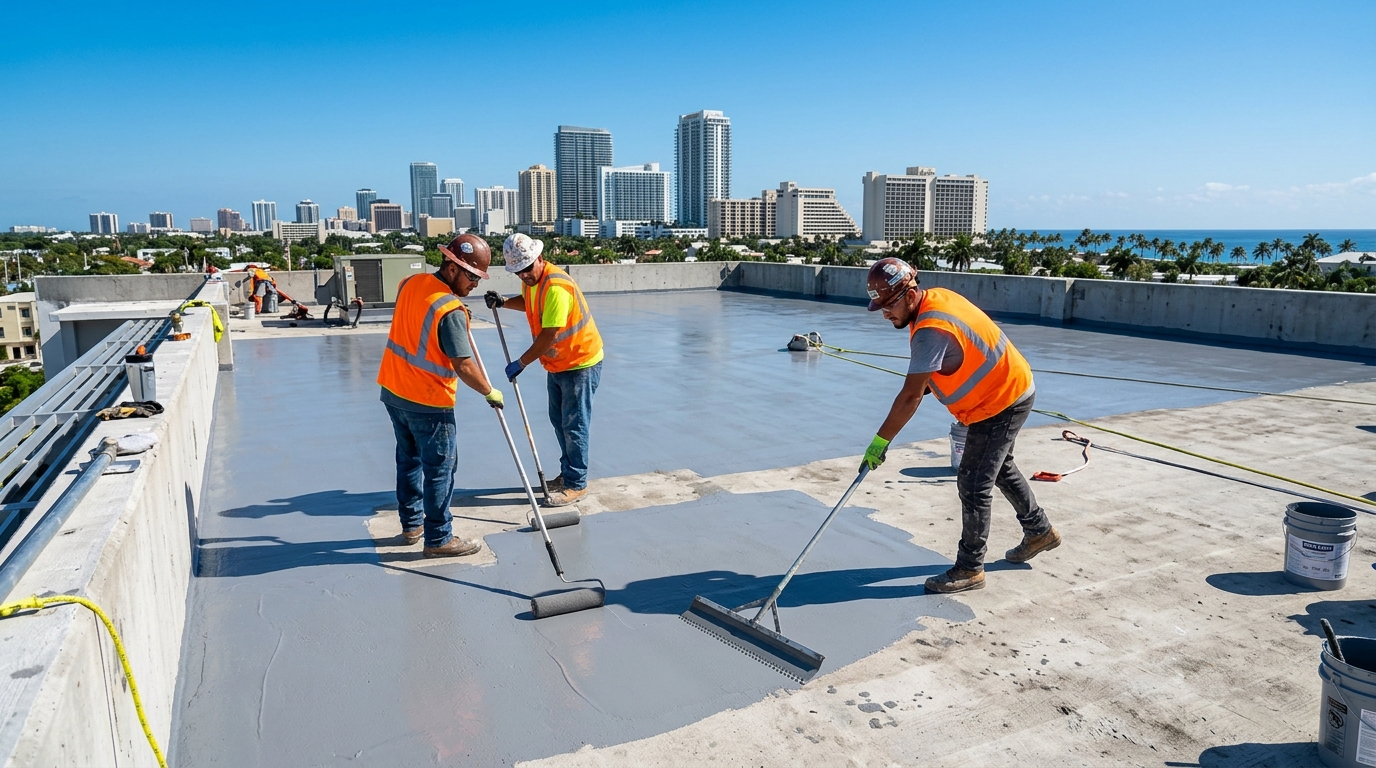
Roof drain repair and waterproofing in Fort Lauderdale addresses one of the highest-consequence single points of failure on any flat or low-slope roof — because when a roof drain fails, ponding water accumulates until it finds a way into the building. Fort Lauderdale's intense rainfall events can deliver two to four inches of water per hour, and a blocked or failed roof drain turns a flat roof into a temporary pond that tests every seam, penetration, and membrane detail at once. At Planet Construction FL, we repair, replace, and properly waterproof roof drains as a priority service — because no amount of membrane quality compensates for a drain that isn't working.
Cold fluid-applied and PMMA systems cure seamlessly, eliminating lap-joint water entry points.
Diamond grinding and shot-blasting achieve ICRI CSP 3-4 anchor profiles for high-strength chemical bonding.
Single-source responsibility combining General Contractor (CGC1517295) and Roofing Contractor (CCC1329271) licenses.
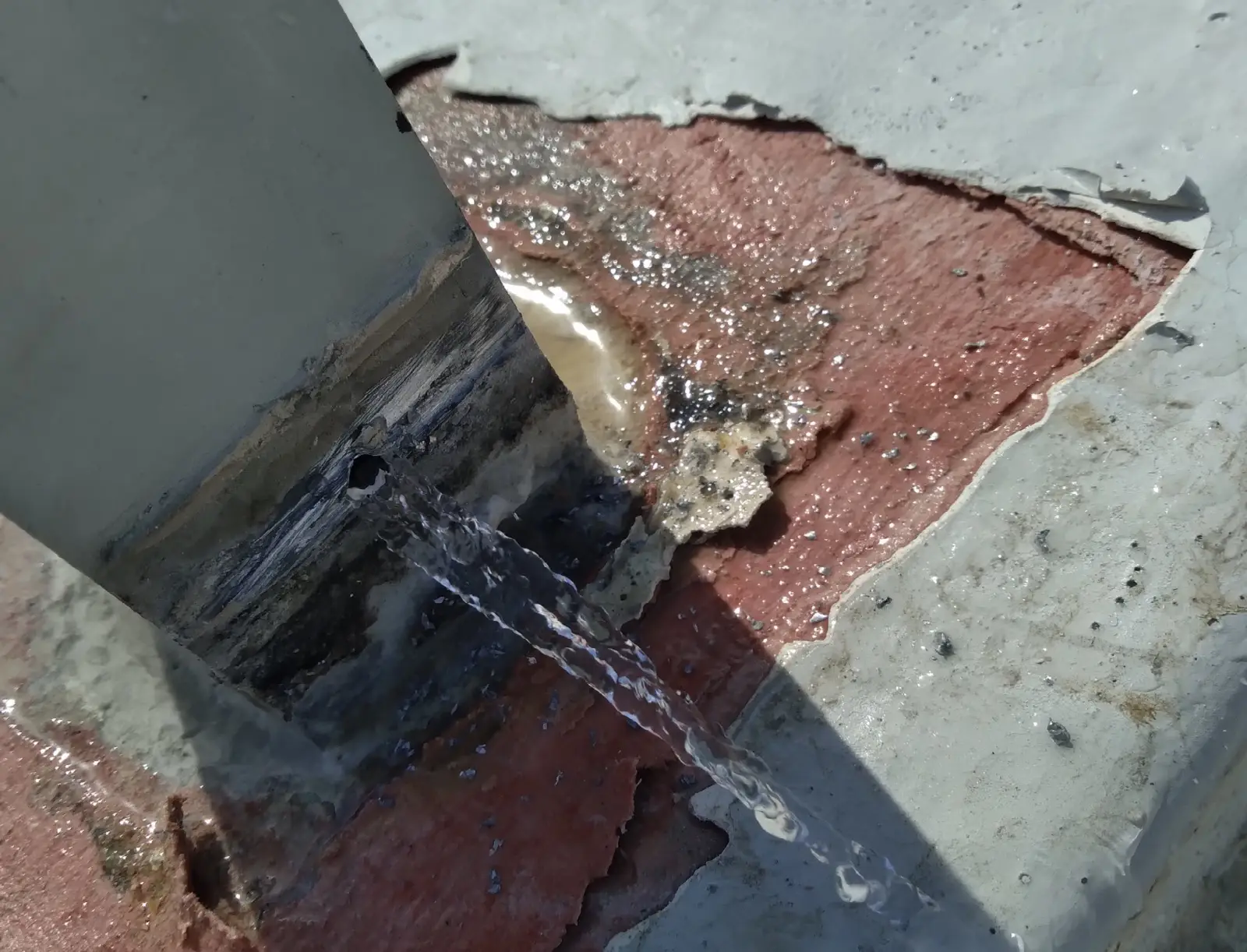
Roof drains are penetrations through your roof system — and like every penetration, they're a high-risk point for leaks. When the seal around a drain fails, water doesn't run down the pipe; it runs into the roof assembly. The leak shows up far from the drain, making the source hard to find, and the damage spreads through insulation and decking before anyone catches it.
We expose the drain assembly, repair or replace the bowl and clamping ring as needed, properly seal the membrane to the drain with the right materials and details, and test for proper flow. Every repair is documented and warranted. The result is a drain that does what it's supposed to do — move water off the roof and out of the building.
Roof drain failures in Fort Lauderdale follow predictable patterns driven by South Florida's debris load, UV exposure, and the demanding conditions of tropical rainfall events. Debris clogging — leaves, organic matter, and windblown material from South Florida's lush vegetation — is the most common drain failure mode. Fort Lauderdale's sustained winds during storm season carry debris from significant distances, accumulating on rooftops and blocking drain strainers within hours during storm events. The drain collar — the sheet metal or cast iron flange that connects the drain body to the roofing membrane — corrodes over time in South Florida's salt air environment, breaking the watertight seal between the drain and the membrane. The waterproofing membrane at the drain perimeter — typically the most vulnerable location in any flat roof system — fails at the lap or termination, allowing water to bypass the drain and infiltrate the roof substrate.
PEDESTRIAN TRAFFIC
Multi-layer polyurethane traffic membranes with perimeter cant strips and code-approved drip flashing.
Request Detailed Quote →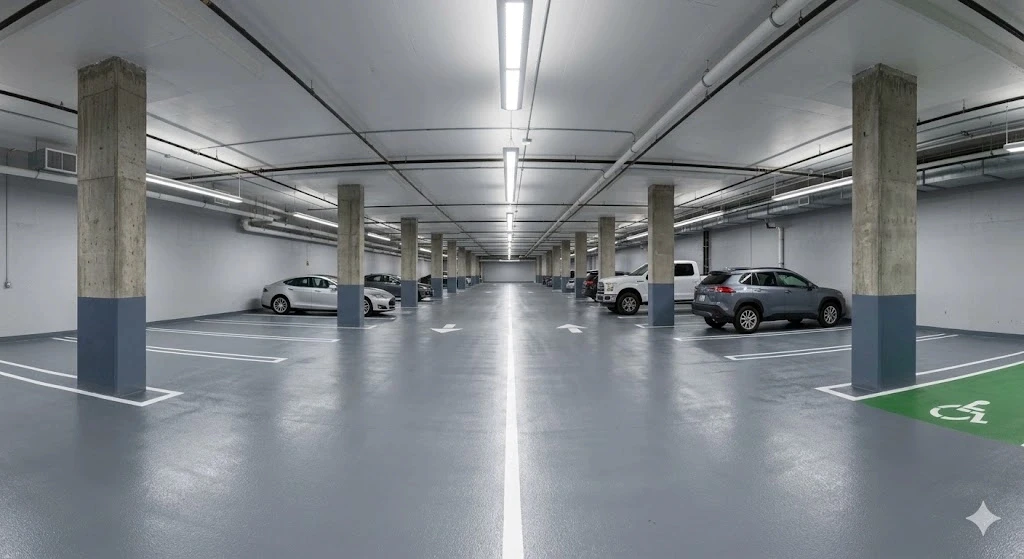 VEHICULAR TRAFFIC
Heavy-duty aggregate-filled elastomeric urethane systems resisting vehicular abrasion and chloride penetration.
View Garage Systems →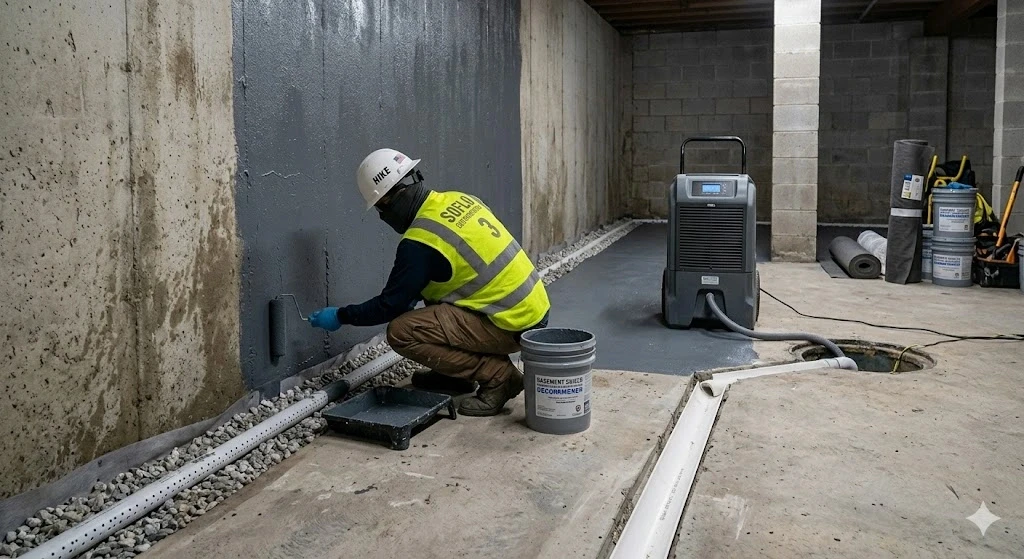 SUBTERRANEAN
Hydrostatic pressure barriers, bentonite sheets, and crystalline injection halting water table infiltration.
Inquire About Foundation →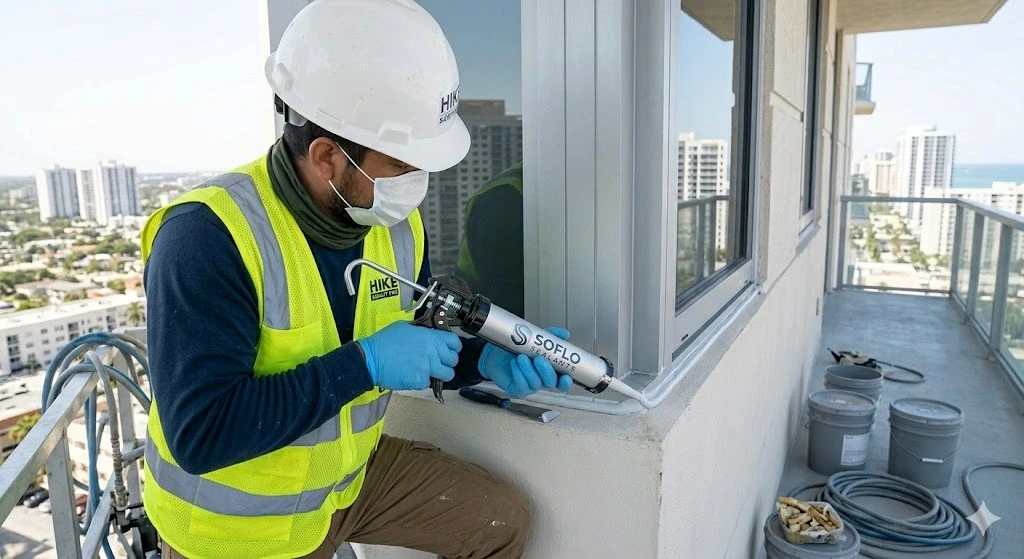 EXPANSION JOINTS
High-movement structural silicone and polyurethane joint sealants for window perimeters and wall transitions.
Explore Joint Sealants →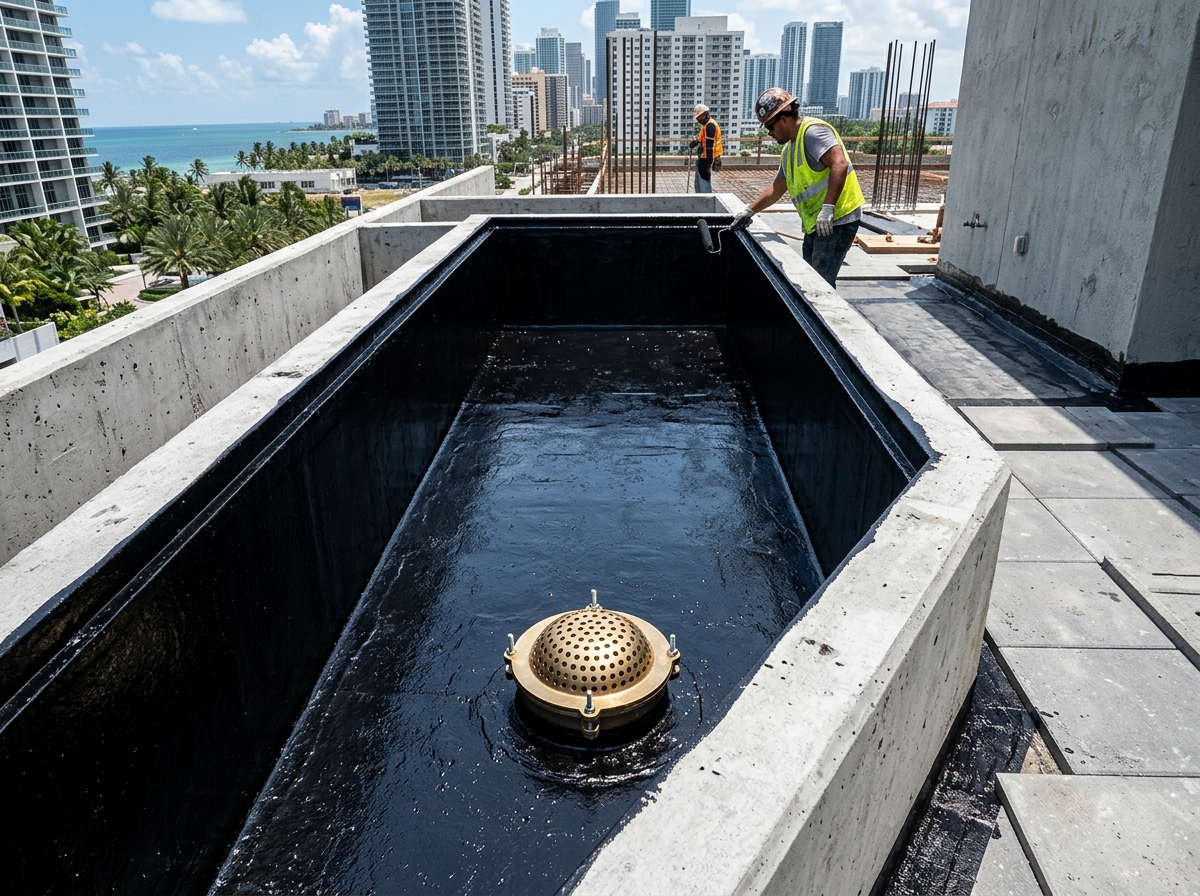 ROOT-RESISTANT
Root-barrier membranes, drainage boards, and internal flashing terminating soil moisture migration.
Inquire About Planters →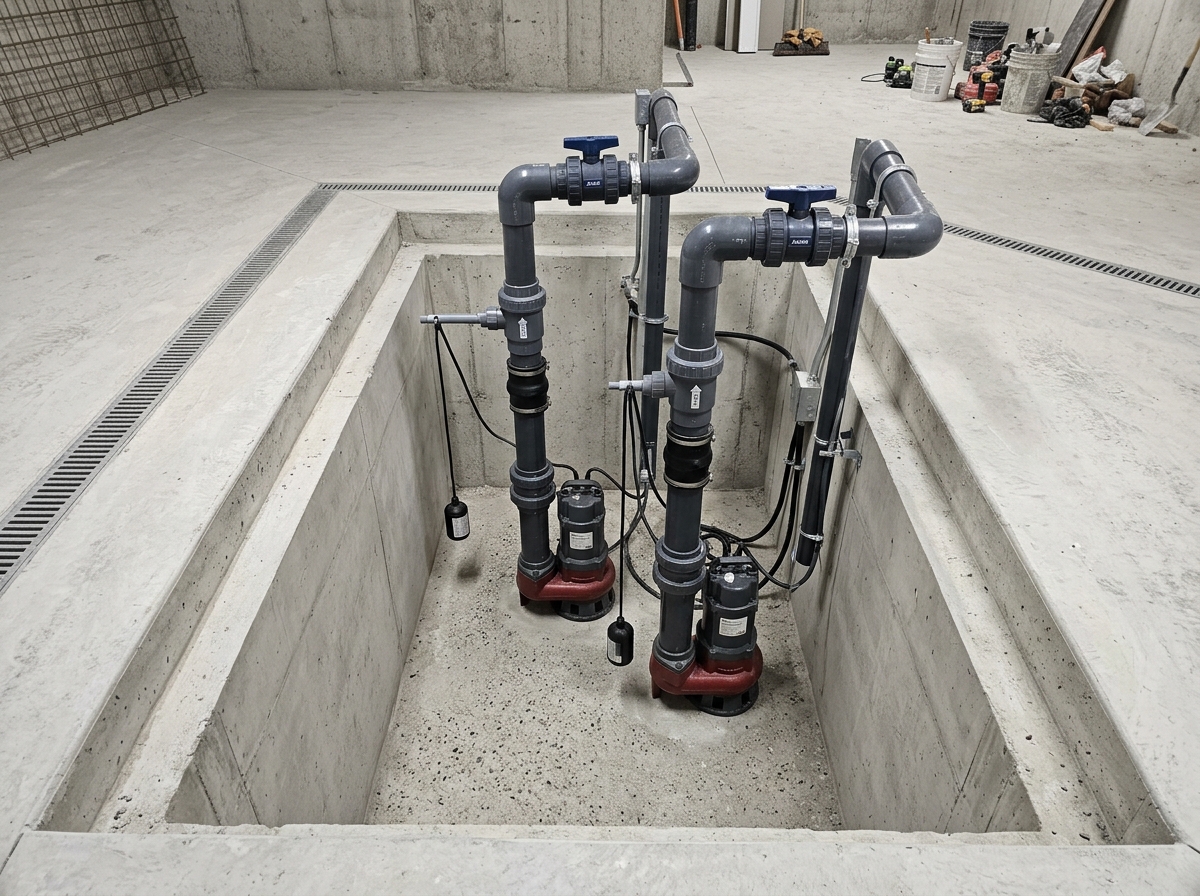 DRAINAGE RELIEF
Commercial cast-iron sump assemblies and perforated gravity drain lines protecting basement and slab levels.
Request Drainage Bid →Roof drain problems announce themselves through visible warning signs that property owners and managers should recognize. Water ponding that remains on the roof 48 hours after a rain event indicates inadequate drainage — either from blocked drains, insufficient drain capacity, or a roofing surface that has settled and lost its drainage slope. Water staining on interior ceilings in a pattern that follows the drain location suggests the drain collar seal has failed and water is infiltrating at the drain penetration. Rust staining on the roof surface around drain locations indicates the drain collar is corroding. Gurgling sounds in the building's drainage system during heavy rain can indicate that roof drains are flowing at capacity — or backing up. Any of these signs warrants a roof drain inspection before the next major storm event.
Planet Construction FL's roof drain repair scope addresses the full drain assembly — not just the strainer. Blocked drains are cleaned of debris and the leader pipe is scoped and flushed clear of obstruction. Corroded drain collars are replaced with new stainless steel or cast iron drain bodies compatible with the existing roofing membrane system. The membrane flashing detail at the new drain is installed per the membrane manufacturer's specification — typically a reinforced membrane strip bonded to the drain collar flange and integrated into the field membrane with sealed overlaps. New drain strainers appropriate for the roof type and debris load are installed. Where drain capacity is inadequate for South Florida's peak rainfall intensity, additional drains or emergency overflow scuppers are added to the scope. Every roof drain repair is flow-tested after installation before the project is accepted.
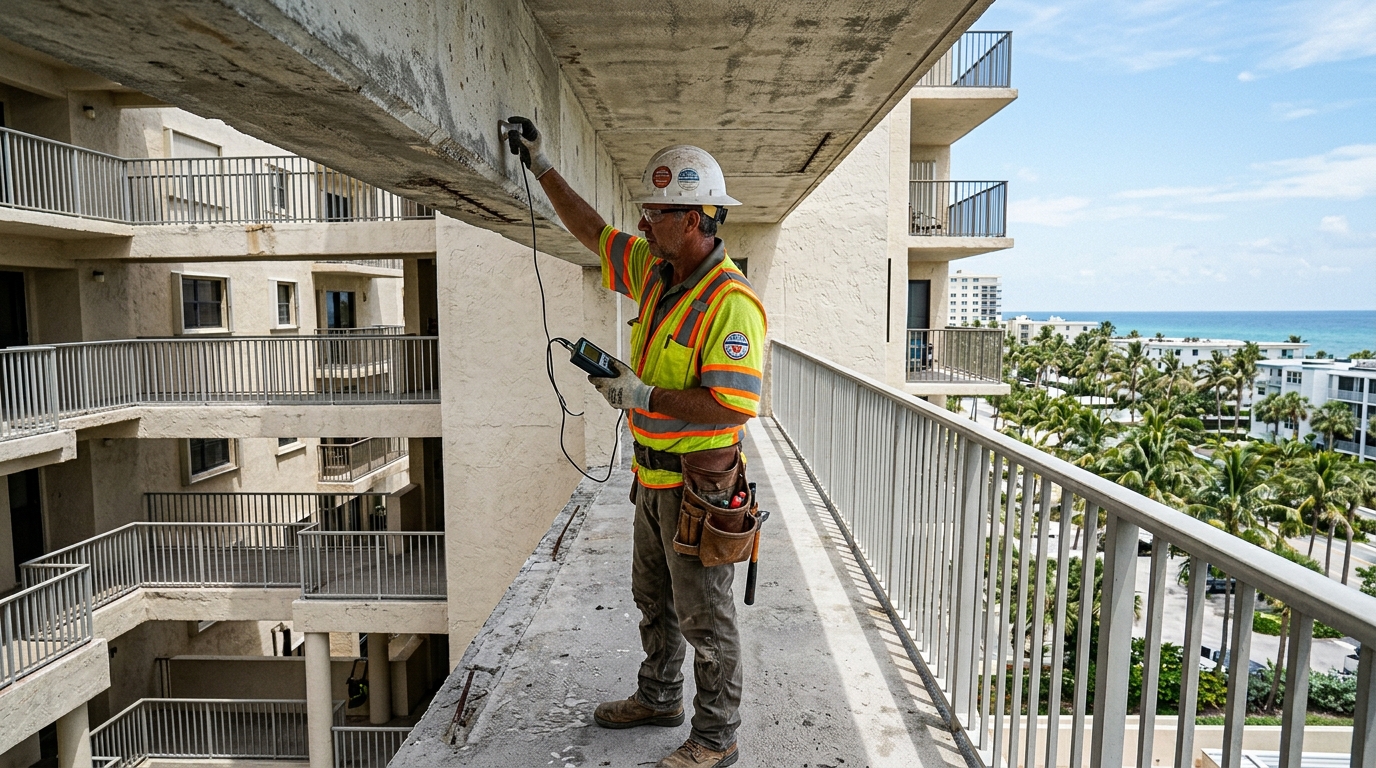
Acoustic hammer sounding for hidden delaminations, diamond grinding to CSP 3-4, and concrete crack routing.
Chipping spalls, treating corroded steel, forming perimeter cove seal fillets, and detail-flashing all drains.
Two-component epoxy moisture barrier primer penetrating concrete pores to eliminate outgassing and maximize pull-off strength.
High-build elastomeric membrane basecoat, reinforced fiber scrim, and aggregate-broadcast UV topcoat for non-slip protection.
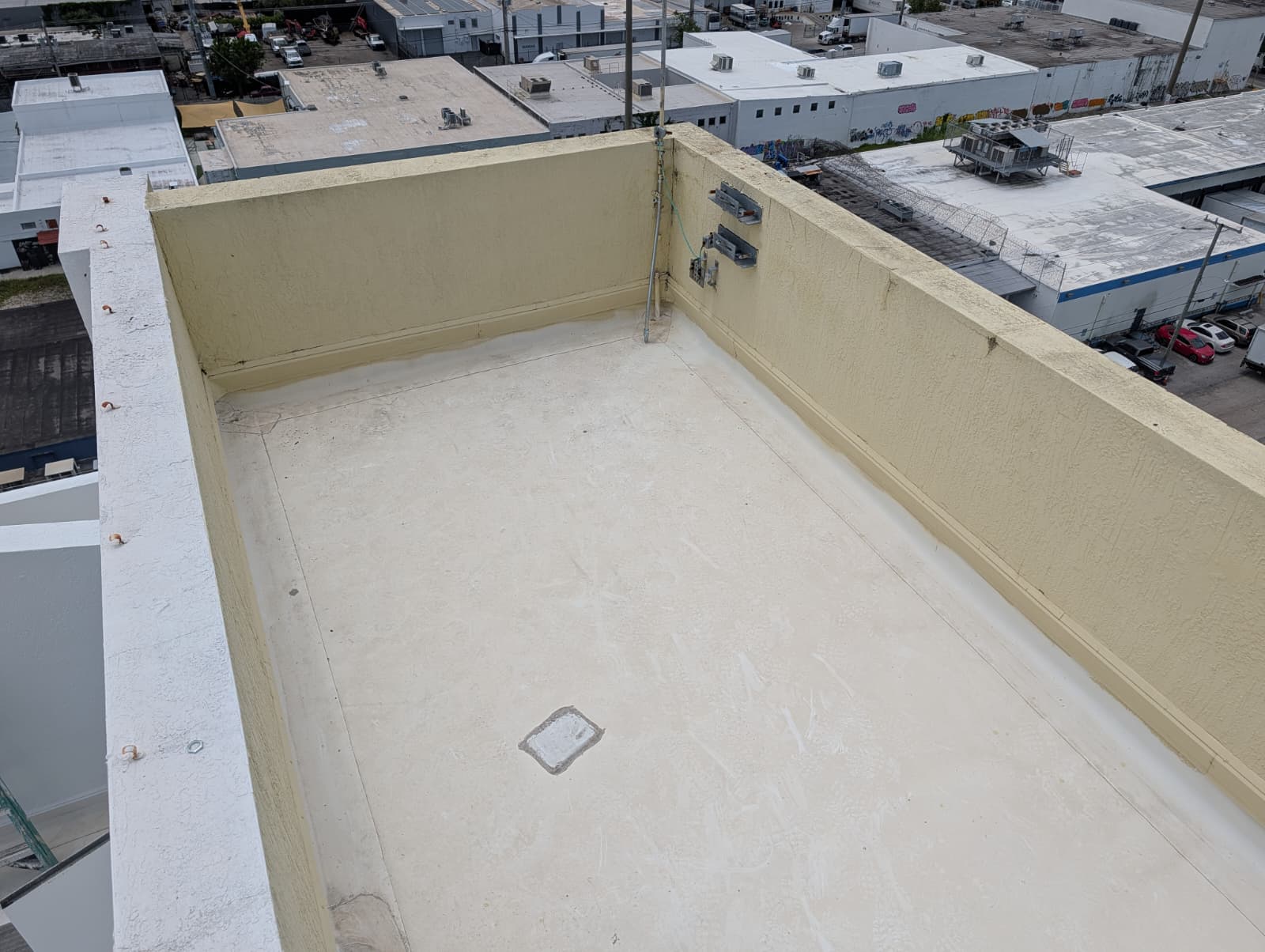
The drain perimeter is the most critical waterproofing detail on a flat roof — it is where the membrane transitions from a horizontal field surface to a three-dimensional drain assembly, and where water is concentrated at the highest density. Planet Construction FL installs drain perimeter waterproofing to manufacturer specifications for the specific membrane system in use, using the reinforcement layers, compatible adhesives, and sealant types that the membrane manufacturer requires at penetrations. The completed drain perimeter detail is inspected by flood testing — filling the drain sump with water and confirming no infiltration at the membrane-to-drain interface before the strainer is reinstalled. This testing step is non-negotiable on every roof drain repair we execute.
Phased construction logistics, resident notices, reserve study alignment, and direct engineer of record milestone recertification sign-offs.
Engineering-compliant high-performance traffic membranes, structural joint sealants, and building envelope moisture defenses across Broward and Palm Beach counties.
Multi-layer polyurethane pedestrian traffic membrane, cove perimeter detailing, and non-slip wear course over 48 residential units.
Shot-blast surface profiling, heavy vehicular urethane membrane application, and reflective stall restriping over 4 levels.
Post-tension cable pocket sealing, railing post embedment waterproofing, and fluid PMMA elastomeric deck coating.
Direct answers on membrane longevity, inspection protocols, resident coordination, and warranty coverage across South Florida.
In Fort Lauderdale's high-debris environment, roof drain strainers should be inspected and cleaned at minimum twice per year — before hurricane season in June and after the peak of rainy season in October. Properties adjacent to South Florida's large canopy trees — ficus, oak, mahogany — may require quarterly cleaning during active leaf drop periods. Clogged drains discovered after a storm event should be cleared immediately, before the next rain event adds more water to an already-ponding roof.
Strainer cleaning — removing the strainer cover and clearing surface debris — is a maintenance task property owners or maintenance staff can perform safely. Investigating and clearing drain leader pipe obstructions below the roof surface, or inspecting the drain collar and membrane flashing condition, requires professional assessment. Planet Construction FL provides roof drain inspection and cleaning as a scheduled maintenance service for commercial and multi-family building clients in addition to our repair scope work.
Roof drain sizing is governed by Florida Building Code requirements based on the roof area served by each drain and the design rainfall intensity for Broward County. Fort Lauderdale's design rainfall rate — typically 8–10 inches per hour for peak storm events — requires larger drain capacity than most northern markets. Undersized roof drains are a common problem in older South Florida buildings, and adding drain capacity is often the most cost-effective way to reduce ponding and protect flat roof membranes from the stress of accumulated water loads.
Replacement of a drain body at an existing drain location typically does not require a permit. Adding new roof drains or modifying the roof drainage system's connection to the building's interior drain piping may require a plumbing permit. Planet Construction FL assesses permit requirements for each roof drain repair scope and handles all permit filings where required.
Request a comprehensive moisture diagnostic, membrane pull-off test, or turnkey board proposal. We provide detailed line-item bids backed by dual state contractor licenses.