Post-Tension Cable Repair in Fort Lauderdale, FL

Failed PT cables can quietly compromise an entire slab. We locate, expose, and repair tensioned cables with the precision this work demands — and full documentation.

PTI CERTIFIED Post-Tensioning Institute Standards
2.6 GHz GPR RADAR Zero-Strike Subsurface Locating
100% IN-HOUSE CREWS Zero Subcontracting
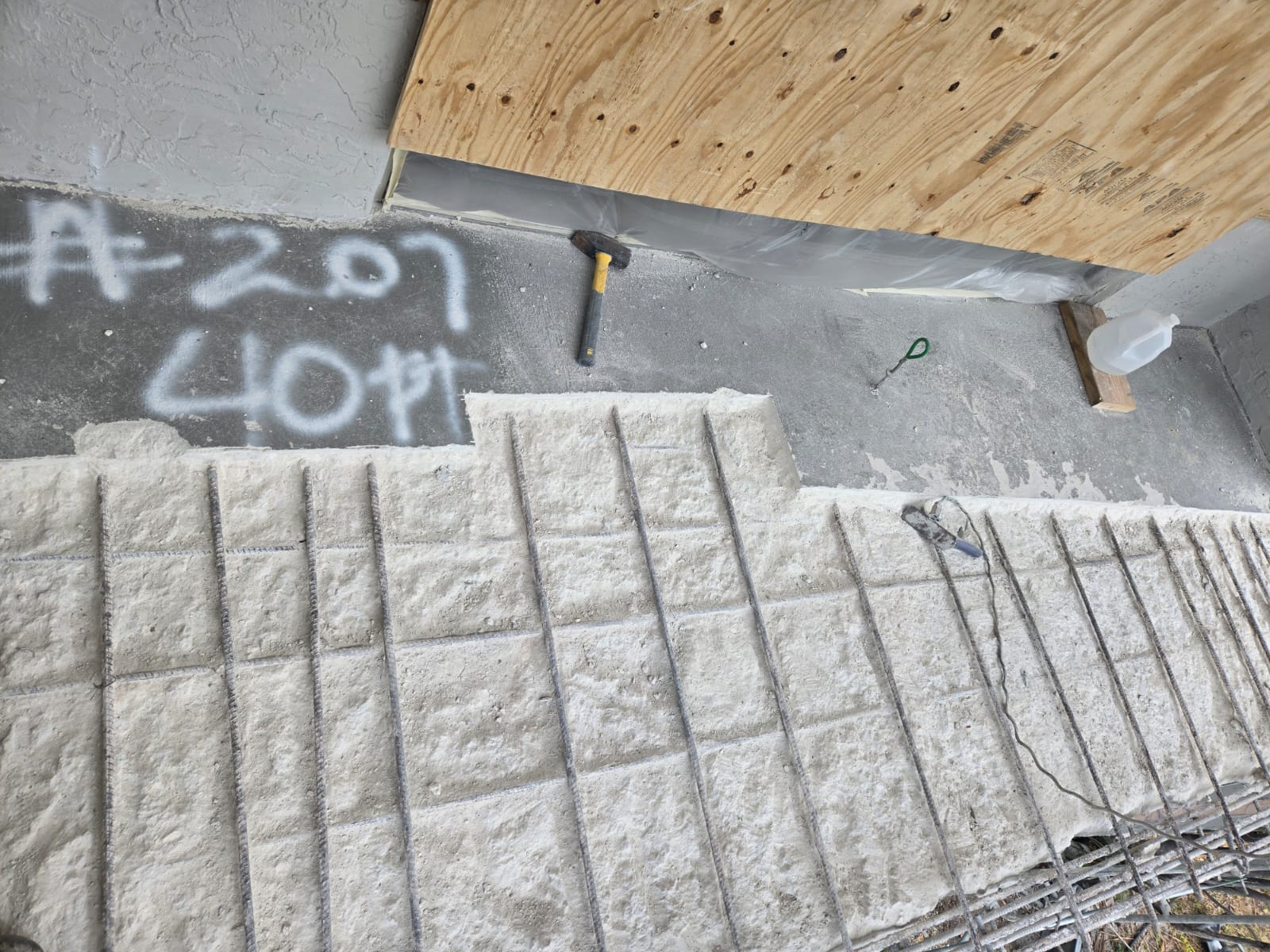
Post-tension cable tendon repair and hydraulic stressing in concrete slab
FL STATE LICENSED
CGC1517295 • CCC1329271
33,000 LBS
Tension Calibration
2.6 GHz GPR
Radar Locating
PTI Certified
Strand Splicing
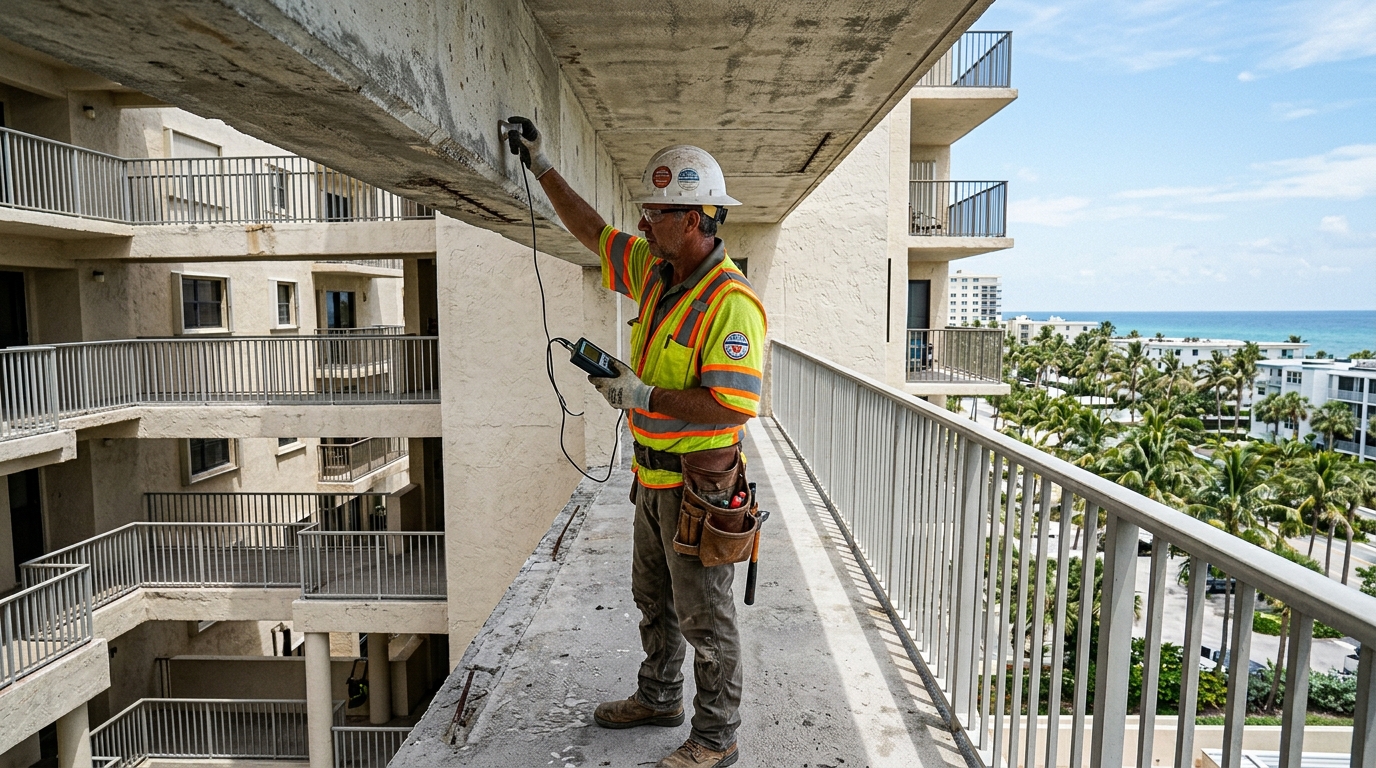
Post tension tendon repair inspection on active South Florida high rise jobsite
33k LBS Hydraulic Calibration Gauge
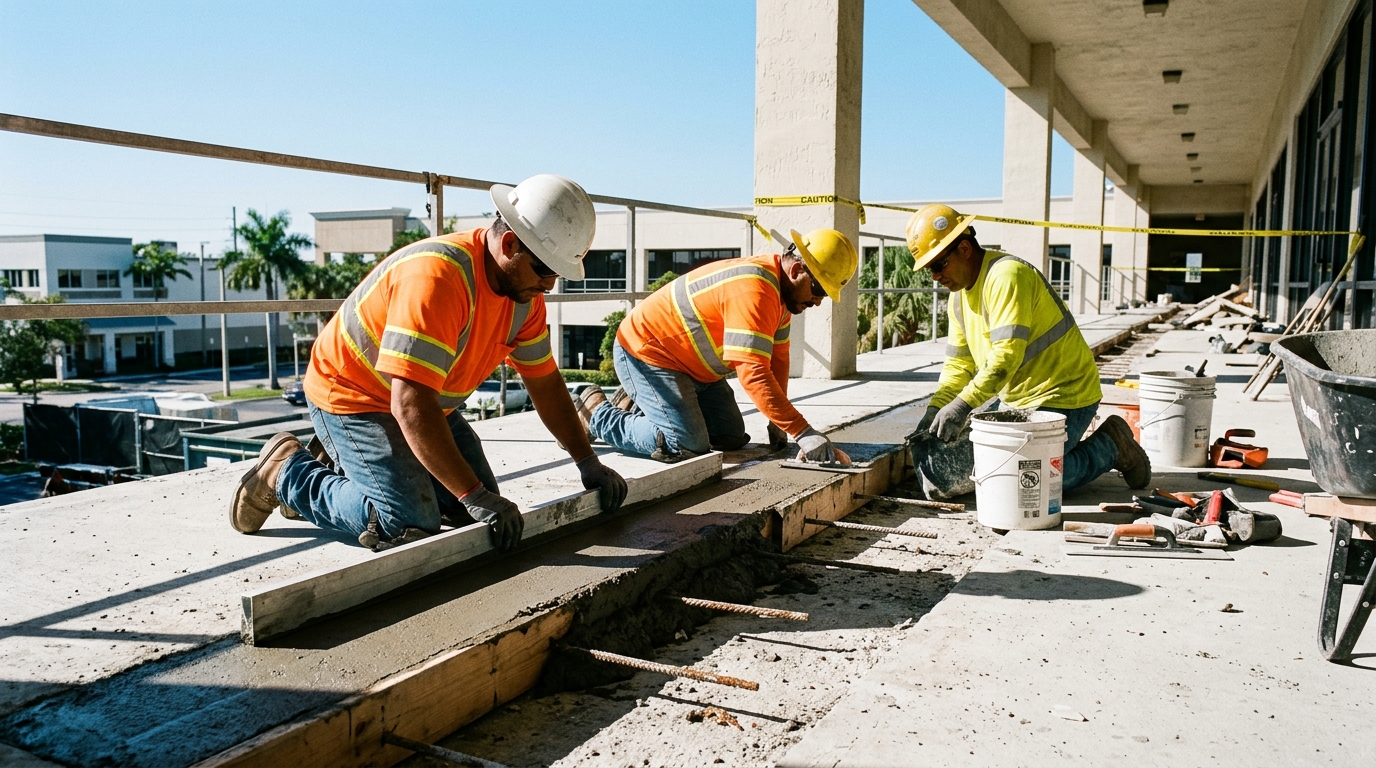
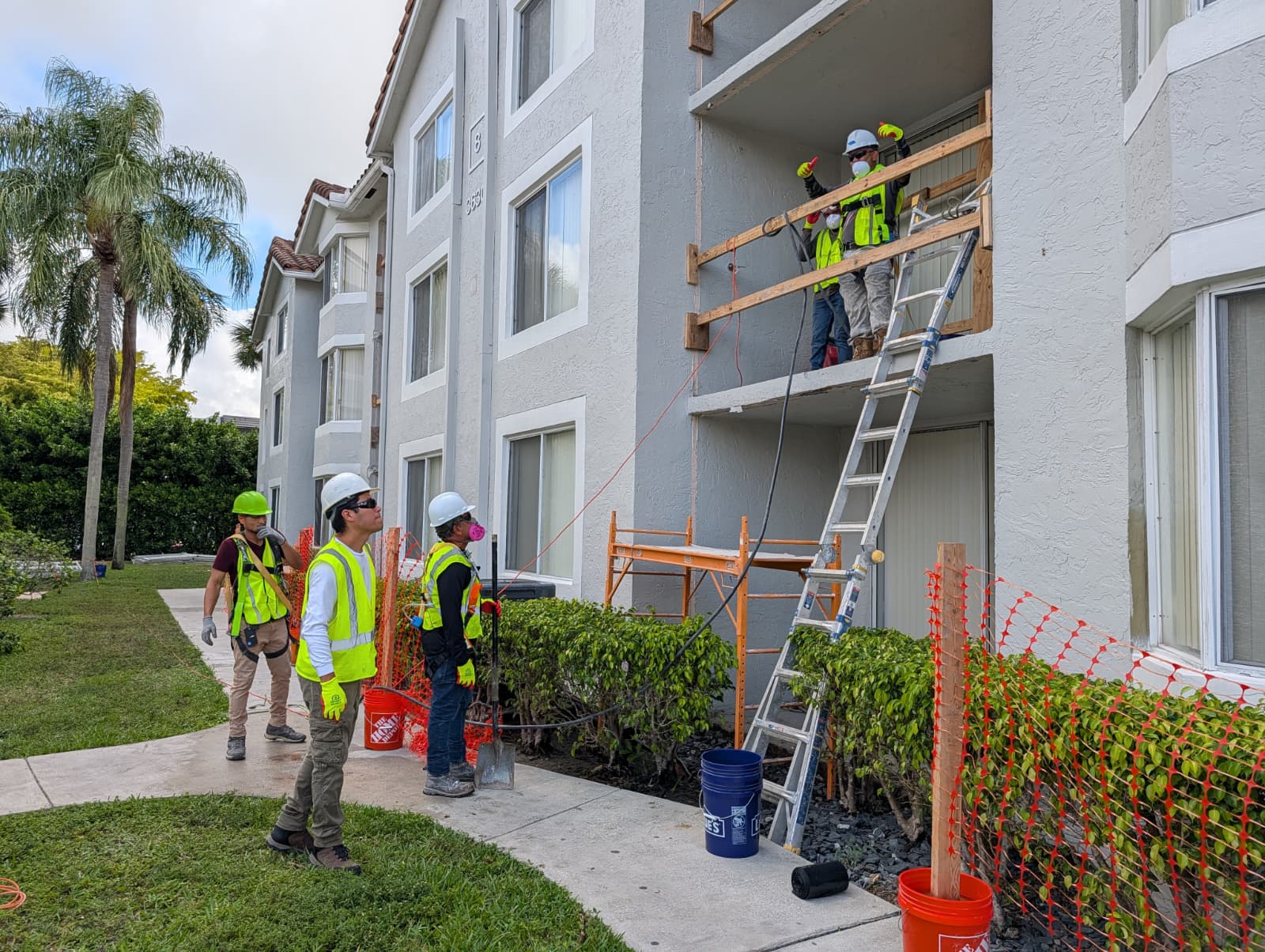
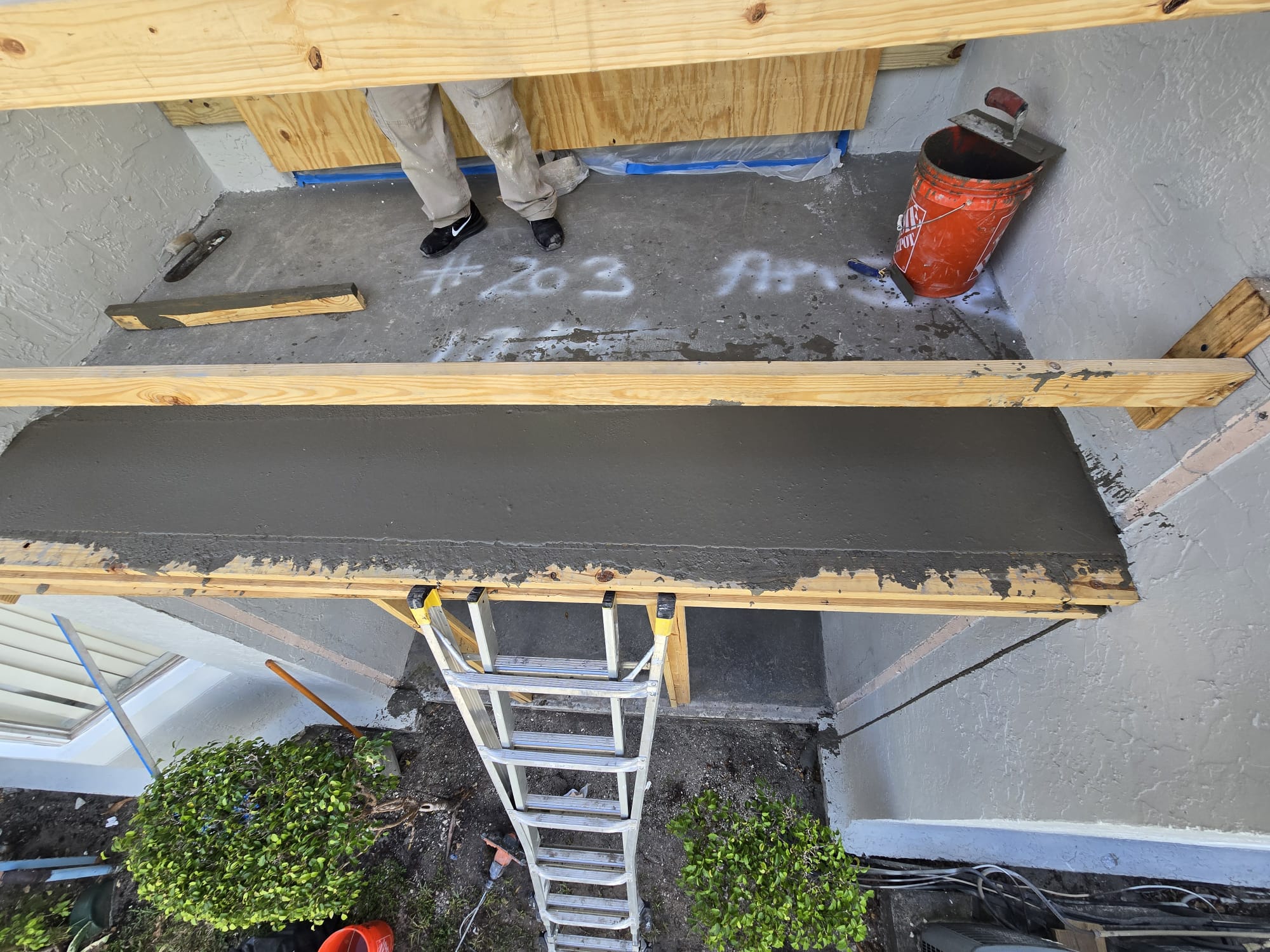
In-house concrete restoration crew executing post-tension strand tensioning
FIELD EXPERTISE • ICRI STANDARDS

Precision Repairs for Tensioned Slabs

Post-tension cable repair in Fort Lauderdale is among the most specialized structural repair services available — and one where the stakes of getting it wrong are extremely high. Post-tensioned concrete slabs are common throughout South Florida's residential and commercial buildings, and when a tendon fails, the consequences for slab performance and structural integrity can be significant. At Planet Construction FL, we work with licensed structural engineers to identify, assess, and repair post-tension failures in Fort Lauderdale's buildings — safely, correctly, and with full documentation.

High-Frequency GPR Scanning

Pinpoints post-tension cable depth, tendon profile, and lateral position to within 1/8", preventing catastrophic accidental severing during chipping.

Dogbone Splice Couplers

Engineered mechanical couplers join replacement strands seamlessly, restoring full engineering tension capacity without building redesign.

Calibrated Hydraulic Tensioning

Calibrated 33,000-lb hydraulic monostrand stressing jacks re-establish design tension with precision gauge and elongation verification.

Life Safety • Structural Risk Mitigation

A Failed PT Cable Compromises the Whole Slab

Post-tension cables are the hidden tensioned steel that holds many modern slabs together. When one fails — from corrosion, water intrusion, or impact — the slab silently loses structural capacity in a way that visual inspection alone can't catch. Working on PT slabs without the right knowledge and equipment is dangerous; ignoring the problem is worse.

Mandatory Building Department Benchmark • FBC Standards
Engineered Protocol • Quality Assurance

Specialized PT Repairs With Full Documentation

We work with the precision PT repair demands: locating the cable accurately, exposing it carefully, repairing or replacing the affected section under proper tension, and rebuilding the slab to spec. Every repair is photographed, measured, and documented for the engineer of record, so you have full records of the work performed.

Fully documented for engineer of record recertification file
POST-TENSION REHABILITATION DISCIPLINES • TURNKEY EXECUTION

What Are Post-Tension Cables and Why They Fail

Post-tensioned concrete slabs are reinforced with high-strength steel tendons — cables or strands — that are tensioned after the concrete has cured. This tensioning places the slab in compression, dramatically increasing its load capacity and allowing thinner, longer-span slabs than conventional rebar reinforcement allows. In South Florida, post-tensioned slabs are common in condominium buildings, parking garages, and residential construction built from the 1970s onward. Tendon failure occurs when corrosion attacks the high-strength steel wire — which is far more susceptible to stress corrosion than conventional rebar — or when mechanical damage severs a tendon during construction or renovation. Salt air, moisture infiltration, and construction damage are the primary failure causes in Fort Lauderdale's buildings.

Post tension tendon cable splicing and hydraulic re-stressing TENDON SPLICING
CABLE RESTORATION

Post-Tension Tendon Strand Splicing

Surgical excavation of broken or corroded cables, installation of engineered dogbone couplers, replacement of 0.5" or 0.6" 270k low-relaxation strands, and calibrated hydraulic re-stressing.

  • PTI DC80.3 certified coupler hardware
  • 270 KSI low-relaxation 7-wire steel
  • Precision elongation measurement logs
Inquire About Tendon Splicing →
Post tension slab edge anchor pocket moisture remediation ANCHOR POCKETS
EDGE DEFENSE

Slab Edge Anchor Pocket Remediation

Chipping out porous shrinkage grouts around slab-edge stressing pockets, abrasive cleaning of anchor heads and wedges, application of zinc primer, and sealing with non-shrink polymer grout.

  • Eliminates water intrusion at anchor heads
  • Non-shrink cementitious polymer grouts
  • Prevents explosive slab edge blowouts
Request Pocket Inspection →
High frequency ground penetrating radar GPR concrete scanning for post tension slabs GPR MAPPING
RADAR DIAGNOSTICS

High-Frequency GPR Concrete Scanning

Pre-construction non-destructive radar profiling to map exact cable parabolic drape, buried rebar layers, and embedded conduit, eliminating drill and sawcut strikes completely.

  • 2.6 GHz high-resolution scanning antennas
  • 3D subsurface mapping & depth tagging
  • Guaranteed zero accidental cable cuts
Schedule GPR Scanning →
Post tension tendon plastic duct grease re injection and moisture purging GREASE INJECTION
CORROSION INHIBITION

Grease Duct Injection & Moisture Purging

Vacuum-assisted purging of trapped moisture and dry nitrogen flushing inside plastic sheaths, followed by pressure injection of PTI-approved corrosion-inhibiting PT grease.

  • PTI M10.2 corrosion-inhibiting grease
  • Vacuum moisture evacuation protocol
  • Restores 100% monostrand protection
Inquire About Grease Injection →
Hydrodemolition and precision excavation around post tension cables HYDRODEMOLITION
SAFE EXCAVATION

Surgical Concrete Hydrodemolition

High-pressure water jetting (up to 20,000 PSI) selectively removes delaminated concrete around live tendons without mechanical impact vibration or accidental micro-fracturing.

  • Zero micro-fracturing of adjacent concrete
  • Leaves live plastic sheaths completely intact
  • Superior ICRI CSP-10 bonding profiles
Schedule Hydrodemolition Review →
Carbon fiber CFRP reinforcement for severed post tension spans CFRP BACKUP
STRUCTURAL COMPOSITES

CFRP Supplemental Span Strengthening

When severely corroded tendons cannot be safely spliced, high-modulus carbon fiber laminates are bonded to slab undersides to permanently replace lost flexural and shear capacity.

  • Replaces lost tendon load capacity
  • Zero floor-to-ceiling clearance reduction
  • Approved by Florida licensed PEs
Inquire About CFRP Solutions →
Regulatory Code Standards • FBC & ASTM Compliance

Signs of Post-Tension Cable Failure

Post-tension tendon failures produce specific, recognizable indicators. A loud report — often described as a gunshot sound — heard within the building is sometimes the first sign of a tendon failure as the severed, high-energy strand releases its stored tension. Cracking that follows the tendon layout grid — running in straight lines across the slab in both directions — indicates loss of compression in the slab from one or more failed tendons. Visible corrosion staining at the slab soffit along tendon lines, combined with spalling along those lines, is a clear visual indicator of tendon corrosion. Tendon end anchor blowouts — where the concrete around the tendon pocket at the slab edge fails — are another indicator. Any of these signs requires immediate professional assessment, not observation and waiting.

Licensed CGC1517295 • CCC1329271 Execution
Direct Engineer of Record Special Inspections
Code Assurance Criteria
ENGINEERING PROTOCOL
Sealed PE Affidavits
Signed & sealed engineering inspection reports for city permit closeout.
MATERIAL SPECIFICATION
ASTM C928 Polymer Mortars
High-early strength (>7,500 PSI) with micro-silica and corrosion inhibitor.
LEGAL COMPLIANCE
Florida SB 4-D Milestone
Phase 1 & Phase 2 structural repair scopes fully documented for HOA records.
Request Engineering Scope Review →
THE DUAL-LICENSE DIFFERENCE

Why Post-Tensioned Slabs Demand Single-Source General Contracting

Post-tensioned concrete carries massive stored mechanical energy. Slicing trades across uncoordinated subcontractors invites catastrophic structural failure.

THE TRADITIONAL MODEL

Uncertified Chipping Hazards

Generic concrete patchers using heavy jackhammers frequently strike live cables, instantly severing 30,000 lbs of tension. Slabs crack across entire bays, and the contractor denies liability.

Critical Risk: Catastrophic explosive cable releases, structural condemnation, and board lawsuits.
THRESHOLD ENGINEERING

Engineer of Record Sign-Offs

We collaborate with your structural Engineer of Record (EOR) daily. Calibrated elongation readings, pressure gauge logs, and shoring calculations are documented for seamless municipal milestone approvals.

Turnkey Compliance: Full threshold inspection documentation, city permit closure, and SB 4-D milestone compliance.
RIGOROUS 5-PHASE PROTOCOL

Why Specialized Repair Is Critical

Post-tensioned slabs are under active, high-energy compression — the steel tendons contain enormous stored energy. Disturbing the slab or tendons without understanding the tendon layout and current tension state is dangerous. Cutting through a post-tensioned slab for plumbing or mechanical penetrations without identifying and protecting the tendons can sever live tendons, releasing energy suddenly and catastrophically. Planet Construction FL strictly follows established protocols for working in and around post-tensioned slabs: tendon identification using ground-penetrating radar or existing structural drawings before any cutting or coring, coordination with the structural engineer of record, and repair execution that follows the approved repair design. No shortcuts are acceptable on PT slab repair.

01
Subsurface Mapping

GPR Radar Locating

High-frequency GPR scanning identifies exact tendon parabolic profiles, live conduit locations, and slab thickness, establishing safe excavation boundaries.

02
Temporary Support

Certified Shoring

Engineered multi-tier hydraulic shoring towers are erected directly below active spans to safely absorb structural loads before any concrete chipping starts.

03
Surgical Chipping

Precision Excavation

Pneumatic chipping or hydrodemolition carefully exposes damaged monostrand sections without nicking adjacent live plastic sheaths or anchor wedges.

04
Strand Splicing

Dogbone Coupler

Corroded strands are excised and replaced with PTI-certified 270k steel, coupled with mechanical dogbone connectors, and prepared for stressing.

05
Hydraulic Stressing

Tension & Grout

Calibrated monostrand jacks apply engineered tension up to 33,000 lbs. Elongation is verified, anchor pockets are grouted, and city permits are signed off.

Our Post-Tension Repair Process
Field Verified • Active Florida Site
Florida Milestone • SB 4-D Engineering Standard
Direct Engineer-of-Record Coordination • Licensed CGC1517295 Execution
Commercial Asset Managers • HOA Boards

Our Post-Tension Repair Process

Post-tension tendon repair begins with a structural assessment coordinated with a licensed structural engineer. The failed tendon location is identified and the extent of corrosion or damage is mapped. The repair design — developed by the engineer — specifies the repair method: in most cases, the failed tendon is cut beyond the corrosion zone, a new coupler and supplemental tendon segment are installed, and the tendon is re-stressed to restore the original design tension level. The concrete at the repair zone is then rebuilt with FDOT-approved repair mortar, and the anchor pocket is restored. Throughout the process, the slab is monitored for any additional tendon failures triggered by changes in the compression state, and the structural engineer approves each phase before work proceeds.

Multi-Unit Program Support

Phased construction logistics, resident notices, reserve study alignment, and direct engineer of record milestone recertification sign-offs.

HOA Board Presentation Packages & Milestone Recertification Decks
Multi-Year Capital Expenditure Phasing to Mitigate Special Assessments
Request Program Proposal Direct Qualifier CGC1517295 • No Obligation Board Review
FIELD CRAFT • REAL SOUTH FLORIDA SITES

Verified Project Spotlight • South Florida Concrete Restorations

Documented case studies showcasing engineered structural repairs across Broward and Palm Beach County properties.

Fort Lauderdale high rise oceanfront balcony post tension repair
DIV 03 • HIGH-RISE Fort Lauderdale, FL
FORT LAUDERDALE • OCEANFRONT

Oceanfront Tower Balcony PT Restoration

Remediated 16 severed unbonded balcony tendons, installed dogbone splices, re-tensioned to 33,000 lbs, and encapsulated anchor pockets on a 18-story coastal condominium.

16 Tendons Spliced • EOR Sign-Off Approved
Weston condominium elevated parking deck post tension cable restoration
DIV 03 • PARKING DECK Weston, FL
WESTON • CONDOS

Elevated Garage Deck Tendon Rehab

GPR scanned 28,000 sq ft elevated deck, spliced 24 compromised tendon strands, injected corrosion-inhibiting grease, and sealed with heavy-duty traffic membranes.

Zero Tenant Shutdown • City of Weston Approved
Boca Raton corporate plaza transfer beam post tension reinforcement
DIV 03 • COMMERCIAL Boca Raton, FL
BOCA RATON • COMMERCIAL

Commercial Transfer Beam Strengthening

Combined post-tension tendon replacement with supplemental underside carbon fiber (CFRP) laminates to restore load transfer capacity across retail loading docks.

PT + CFRP Combined • 10-Year Warranty

Offering Entire Superior Services Solutions

Single-source general contracting, coastal roofing, and structural restoration engineered for South Florida.

Genti Kraja (John) - Planet Construction Qualifying Contractor
COMMON QUESTIONS • STRAIGHT ANSWERS

Frequently Asked Questions

Clear answers regarding engineering specifications, municipal code compliance, and structural concrete restoration standards.

Is it safe to occupy a building with a failed post-tension tendon?

It depends on the number of failed tendons, their location, and the slab's overall structural condition. A single isolated tendon failure in a slab with significant redundancy may not create an immediate life safety risk, but requires prompt engineering assessment. Multiple failures, failures at critical slab locations, or failures combined with existing slab distress may require immediate load restrictions or area closures. This determination must be made by a licensed structural engineer — not assumed to be safe.

How do you identify post-tension tendons before cutting or coring?

Ground-penetrating radar (GPR) scanning is the most reliable non-destructive method for locating post-tension tendons in a concrete slab before cutting. GPR produces a scan of the tendon layout that allows penetrations to be located between tendons rather than through them. Planet Construction FL coordinates GPR scanning for any project involving cuts or penetrations in a suspected post-tensioned slab — it is non-negotiable on these projects.

Can all post-tension tendon failures be repaired?

Most post-tension tendon failures can be repaired with the coupler and re-stressing approach described above, provided the corrosion or damage is localized rather than distributed along the tendon's full length. Tendons with widespread corrosion that extends through multiple bays may require a different structural solution — supplemental conventional reinforcement or CFRP strengthening — rather than individual tendon replacement. The structural engineer assesses each failure and specifies the appropriate repair or strengthening approach.

Does post-tension cable repair require a permit?

Yes — post-tension structural repair is a permitted structural repair requiring engineering drawings and calculations for permit submission. Planet Construction FL manages the full permit process and works with the structural engineer to prepare the documentation required for building department review and approval.

FAST WRITTEN ESTIMATES • DIRECT ACCOUNTABILITY

Schedule Your Post-Tension Assessment

Tell us what your engineer flagged. We'll review the situation, scope the repair, and execute it with full documentation.

Need an urgent engineering consultation?

Speak directly with John, Qualifying Contractor (CGC1517295 & CCC1329271). We review GPR data and engineer-of-record repair mandates promptly.

(754) 301-6747
  • Florida Certified General Contractor • Lic #CGC1517295
  • Florida Certified Roofing Contractor • Lic #CCC1329271
  • $2,000,000 General Liability + Complete Workers' Comp

Zero obligation. We treat structural data with strict commercial confidentiality.