 PEDESTRIAN TRAFFIC
BALCONY MEMBRANES
Balconies & Elevated Decks
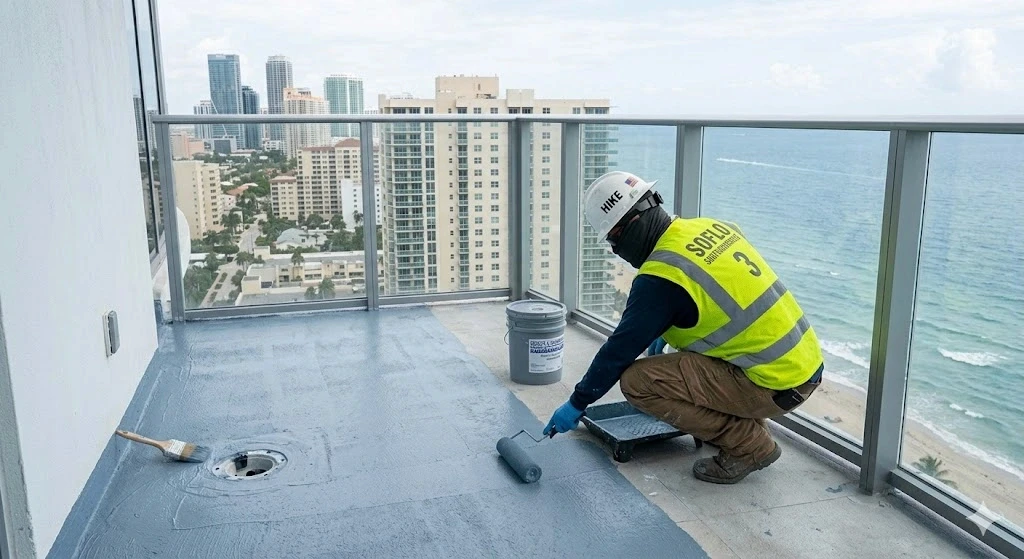
Multi-layer polyurethane traffic membranes with perimeter cant strips and code-approved drip flashing.
Request Detailed Quote →Failed caulking is the #1 source of building leaks in South Florida. We replace sealants at windows, joints, penetrations, and seams with products engineered for the specific exposure.
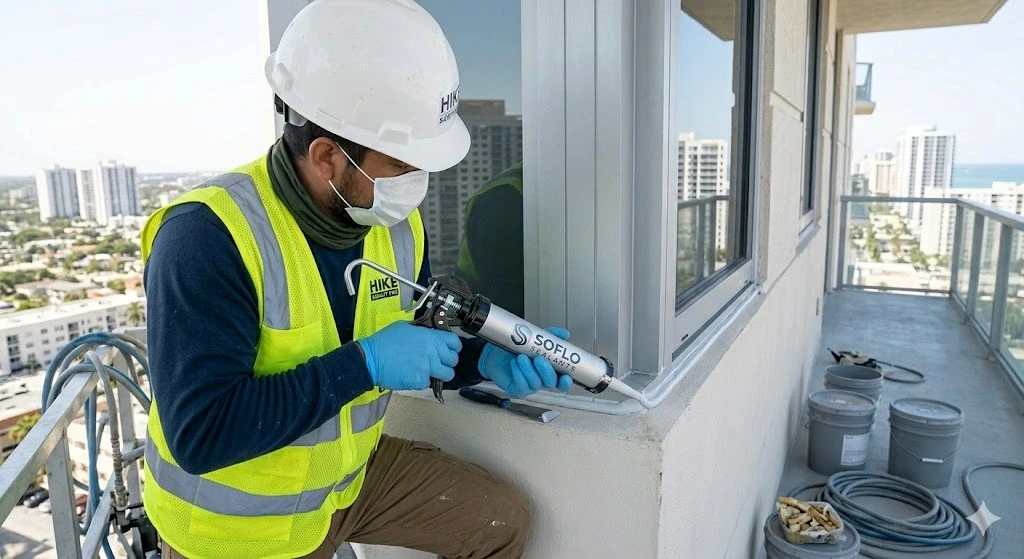
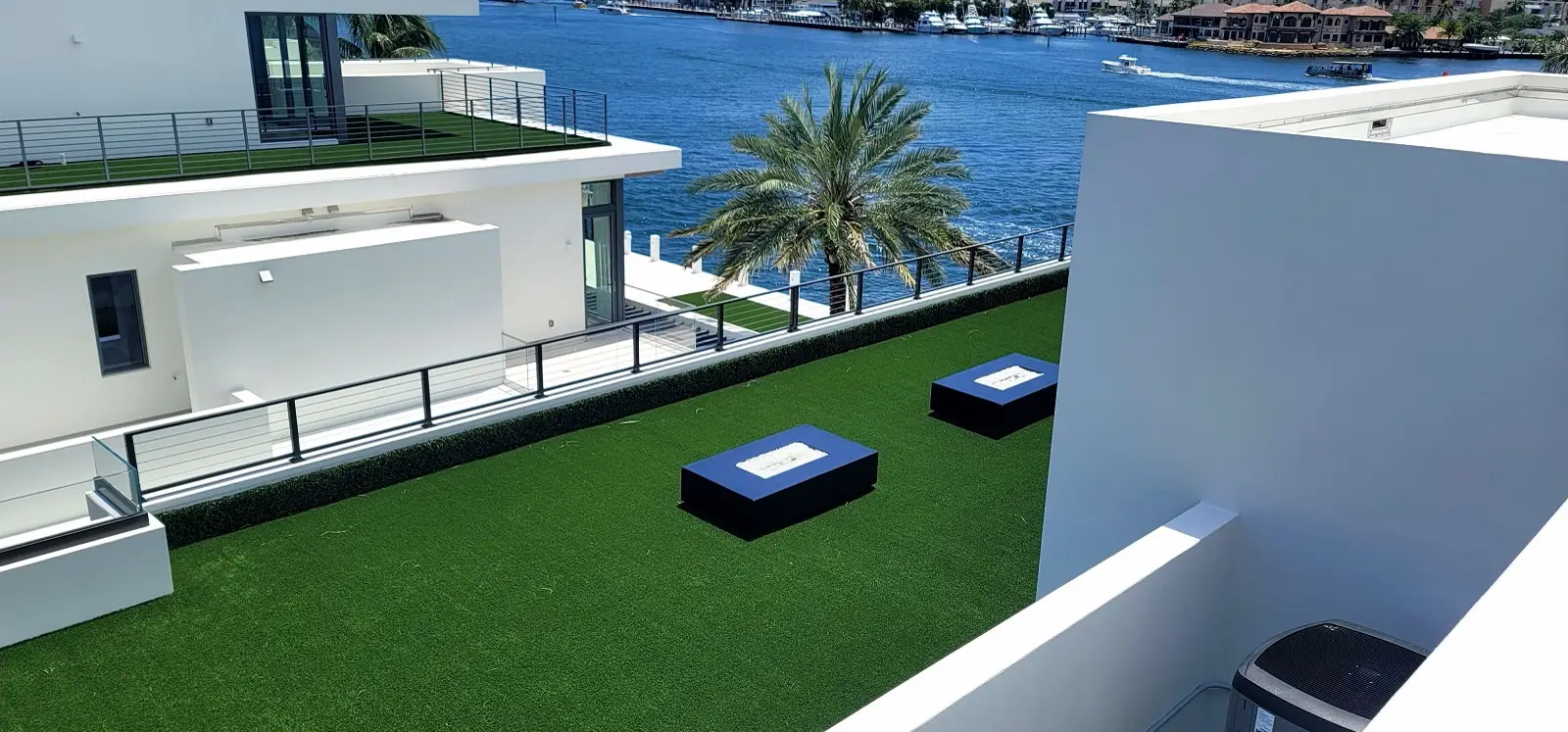
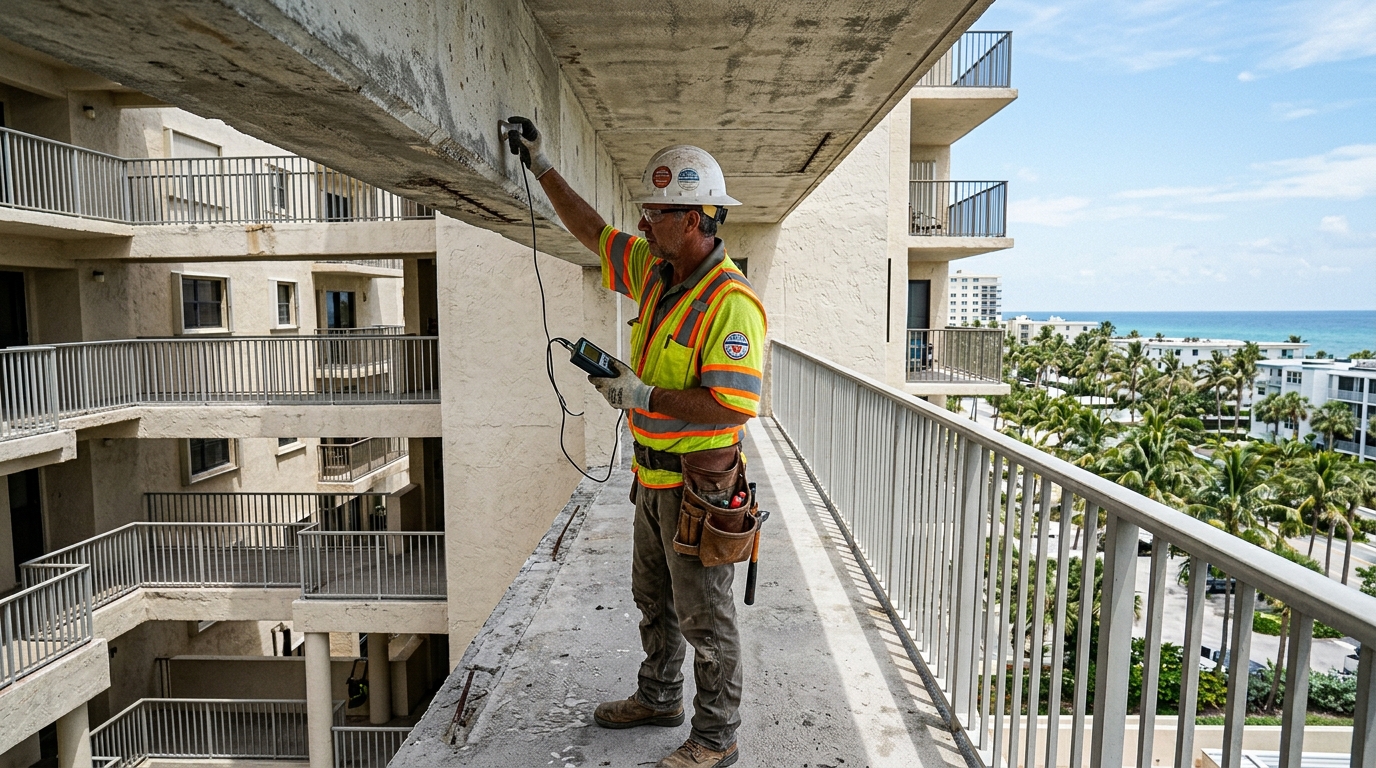
Caulking and sealant replacement in Fort Lauderdale is one of the highest-return waterproofing maintenance services available — and one of the most frequently deferred until water infiltration has already done significant damage. Every window frame, door frame, expansion joint, penetration, and transition detail on a building's exterior is sealed against water entry with caulk or sealant — and South Florida's UV radiation, thermal cycling, and hurricane-force rain are extraordinarily effective at aging and failing these materials. At Planet Construction FL, we replace building sealants systematically, closing every water entry point before the next storm season.
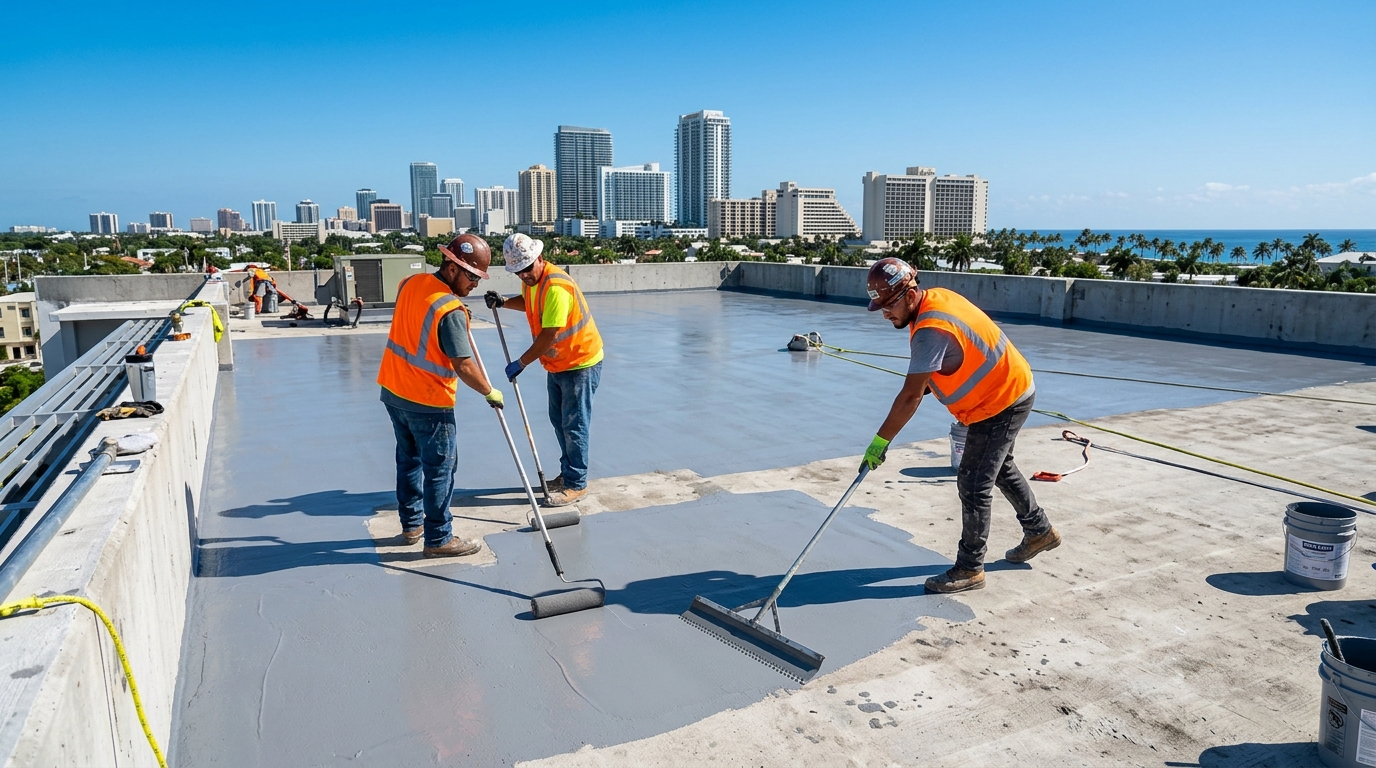
Cold fluid-applied and PMMA systems cure seamlessly, eliminating lap-joint water entry points.
Diamond grinding and shot-blasting achieve ICRI CSP 3-4 anchor profiles for high-strength chemical bonding.
Single-source responsibility combining General Contractor (CGC1517295) and Roofing Contractor (CCC1329271) licenses.
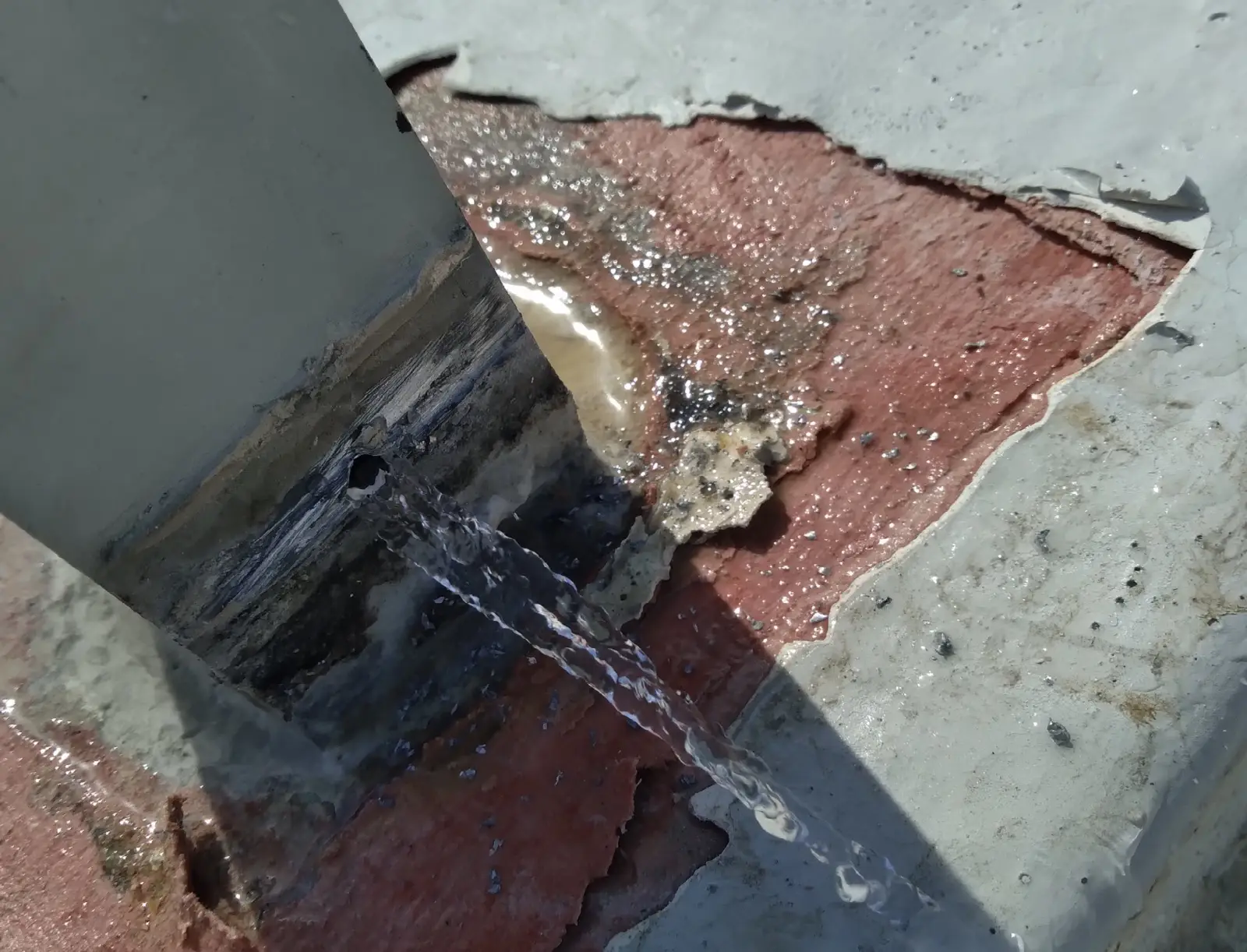
Caulking and sealants have a finite lifespan — and in Florida's UV and humidity, that lifespan is shorter than most people realize. Once sealant cracks, dries out, or pulls away from the substrate, water has a direct path into the building. Most leak investigations end at a failed sealant joint, but most building maintenance plans skip sealant replacement until the damage is already done.
We inspect every sealant joint, remove failed material completely, prep the substrate, install proper backer rod where needed, and apply high-performance sealants matched to the joint's movement and exposure. Window perimeters, control joints, expansion joints, and penetrations all get the right product for the job — and every joint is tooled properly for a long-lasting bond.
Building sealants don't fail all at once — they fail progressively over time as UV radiation breaks down the polymer binder, thermal cycling fatigues the material beyond its elongation capacity, and biological growth in Fort Lauderdale's humid climate colonizes the sealant surface. The indicators of sealant failure are usually visible on inspection: cracking and crazing of the sealant surface — a fine network of cracks that indicates the material has lost its flexibility; shrinkage and pulling away from one or both joint faces — leaving a gap between the sealant and the substrate it should be bonded to; hardening to a brittle, non-flexible condition — visible as a sealant that doesn't compress when pressed; and biological growth — black or green discoloration indicating mold or algae colonization of a porous or cracked sealant surface. Any of these conditions means the sealant is no longer performing its water-exclusion function.
PEDESTRIAN TRAFFIC
Multi-layer polyurethane traffic membranes with perimeter cant strips and code-approved drip flashing.
Request Detailed Quote →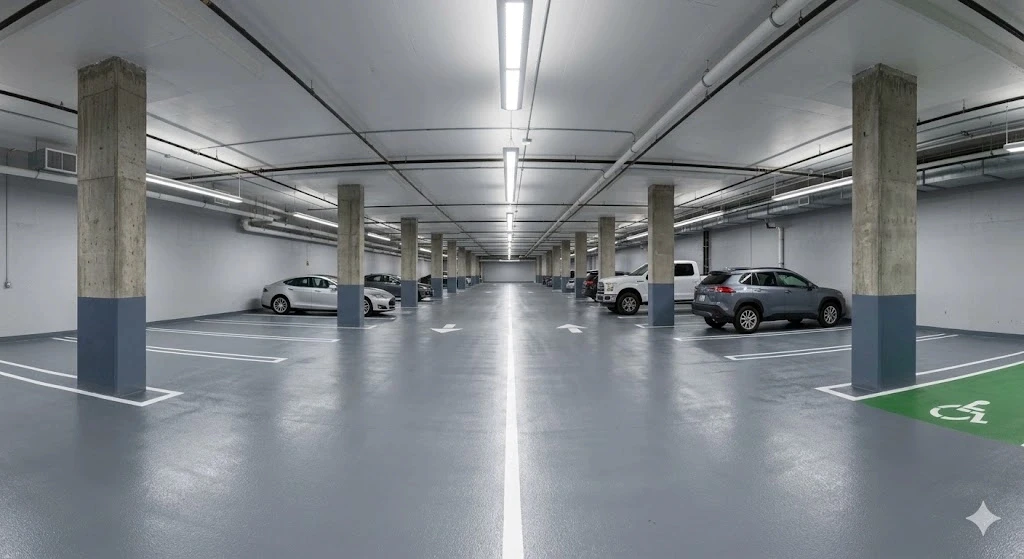 VEHICULAR TRAFFIC
Heavy-duty aggregate-filled elastomeric urethane systems resisting vehicular abrasion and chloride penetration.
View Garage Systems →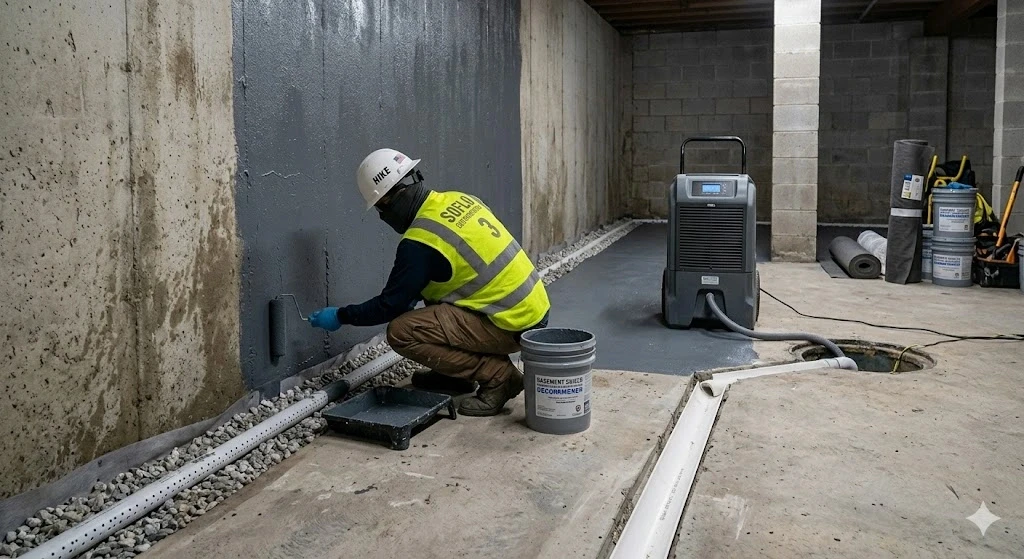 SUBTERRANEAN
Hydrostatic pressure barriers, bentonite sheets, and crystalline injection halting water table infiltration.
Inquire About Foundation →
EXPANSION JOINTS
High-movement structural silicone and polyurethane joint sealants for window perimeters and wall transitions.
Explore Joint Sealants →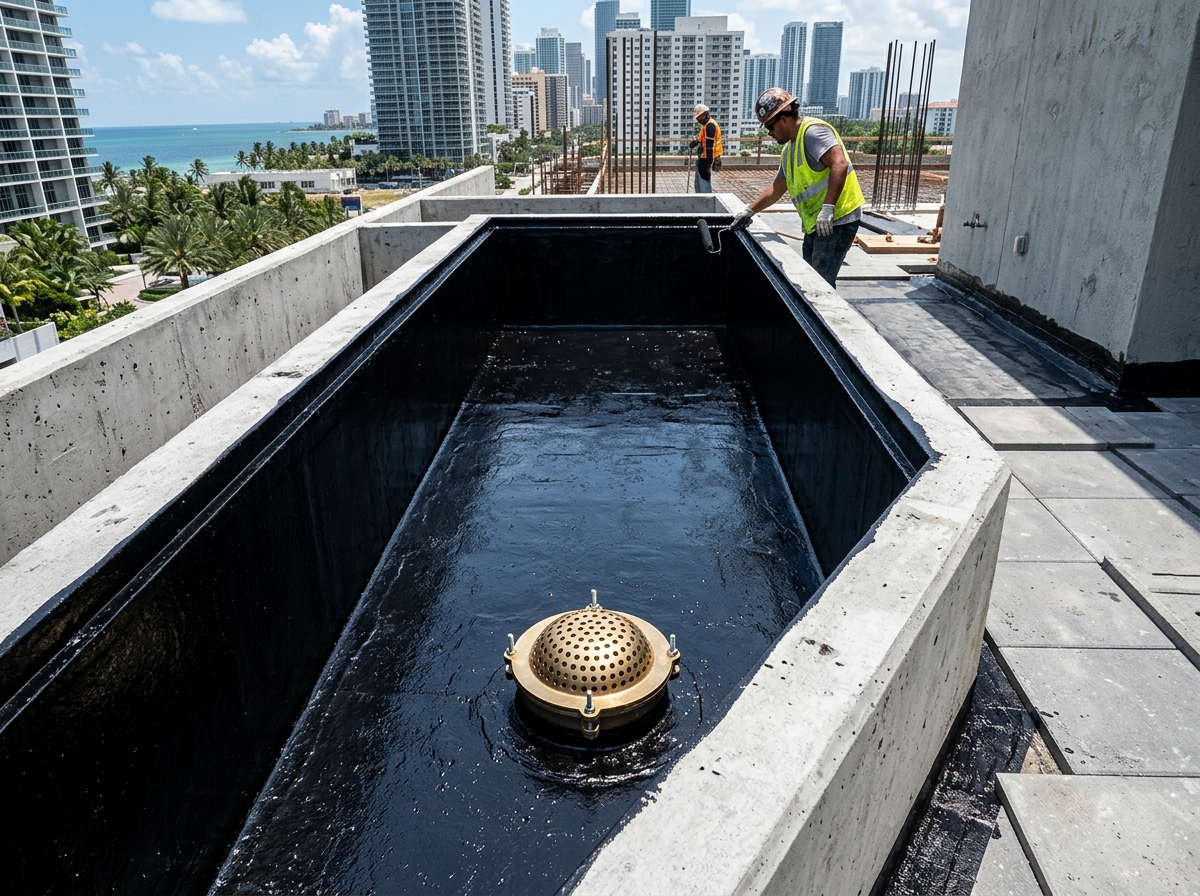 ROOT-RESISTANT
Root-barrier membranes, drainage boards, and internal flashing terminating soil moisture migration.
Inquire About Planters →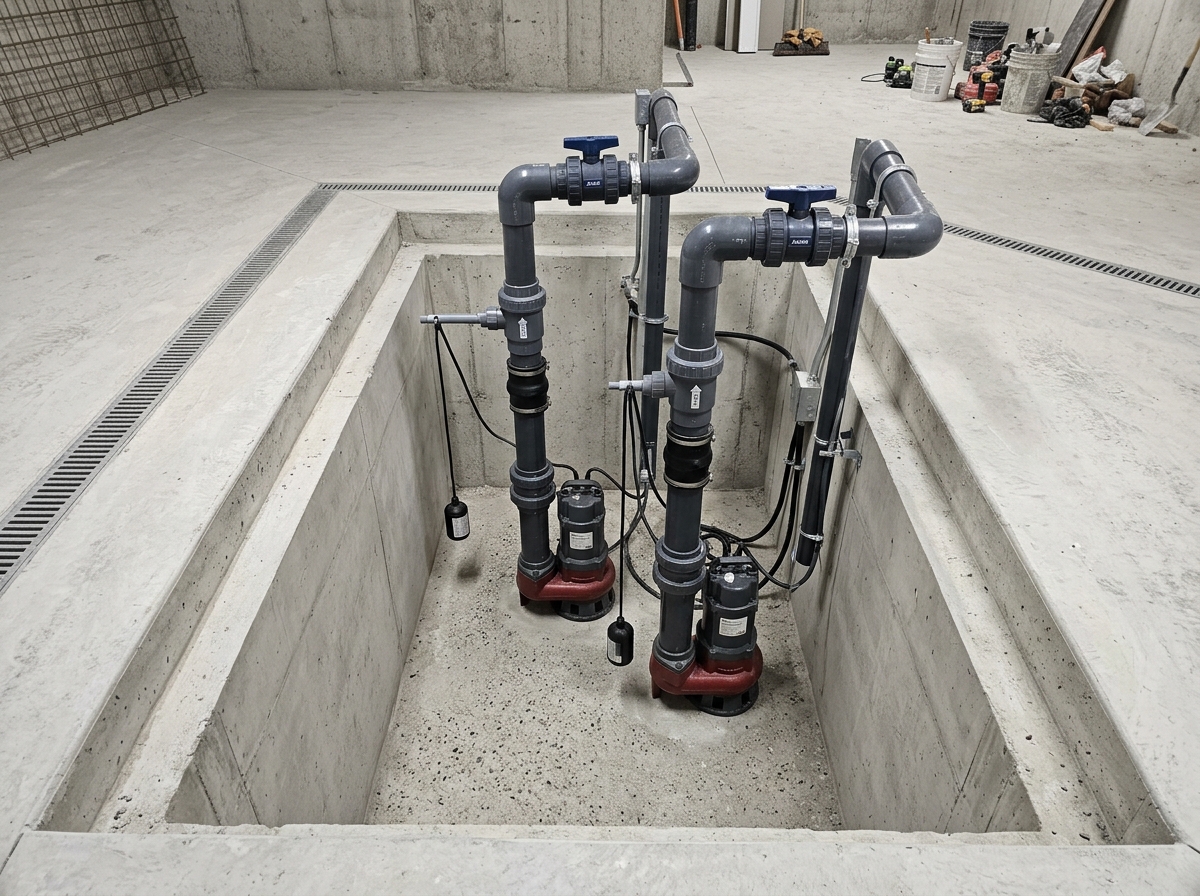 DRAINAGE RELIEF
Commercial cast-iron sump assemblies and perforated gravity drain lines protecting basement and slab levels.
Request Drainage Bid →Sealant selection for Fort Lauderdale buildings requires understanding which sealant chemistry is appropriate for each specific joint application. Silicone sealants provide outstanding UV stability and elongation, making them the preferred choice for window and door perimeter joints on south-facing facades with direct sun exposure — but silicone cannot be painted over, limiting its use where a painted finish is required. Polyurethane sealants combine good UV stability with paintability and high movement accommodation, making them the most versatile choice for building expansion joints and transition details. Modified silicone sealants bridge the gap — paintable, UV-stable, and high-elongation. For parking garage and deck expansion joints, vehicular-grade polyurethane sealants rated for traffic loading are specified. Planet Construction FL selects the correct sealant chemistry for each joint type — using the wrong material is a common failure mode in sealant replacement work.
Window and door perimeter caulking is the most frequently failed sealant detail on Fort Lauderdale's residential and commercial buildings. The perimeter joint between the window or door frame and the surrounding wall substrate moves with every thermal cycle — expanding and contracting as the metal frame heats in the South Florida sun and cools at night. Over 5–10 years, this repeated cycling fatigues even quality sealants beyond their design elongation, producing cracking and debonding at the joint faces. Wind-driven rain during South Florida's storms then forces water through the failed joint and into the wall cavity, where it can travel to interior finishes, insulation, and structural elements. Planet Construction FL replaces window and door perimeter caulking as a routine maintenance item — removing old sealant completely, cleaning joint faces, and installing fresh sealant in the correct profile and tooled finish.
Acoustic hammer sounding for hidden delaminations, diamond grinding to CSP 3-4, and concrete crack routing.
Chipping spalls, treating corroded steel, forming perimeter cove seal fillets, and detail-flashing all drains.
Two-component epoxy moisture barrier primer penetrating concrete pores to eliminate outgassing and maximize pull-off strength.
High-build elastomeric membrane basecoat, reinforced fiber scrim, and aggregate-broadcast UV topcoat for non-slip protection.
For commercial buildings and condominium properties with extensive exterior joint networks, Planet Construction FL develops systematic sealant replacement programs that address the full building exterior on a defined maintenance cycle. A comprehensive sealant inspection documents every joint type, material condition, and failure location on the building's exterior. Priority repairs — joints with active water infiltration or complete sealant loss — are addressed immediately. A phased replacement program for the remainder of the building's joints is developed, typically planned to address the full exterior over a 2–3 year cycle that fits within the building's capital improvement budget. This approach converts reactive emergency leak response into proactive building maintenance — a significant operational improvement for property managers and HOA boards managing aging South Florida building stock.
Phased construction logistics, resident notices, reserve study alignment, and direct engineer of record milestone recertification sign-offs.
Engineering-compliant high-performance traffic membranes, structural joint sealants, and building envelope moisture defenses across Broward and Palm Beach counties.
Multi-layer polyurethane pedestrian traffic membrane, cove perimeter detailing, and non-slip wear course over 48 residential units.
Shot-blast surface profiling, heavy vehicular urethane membrane application, and reflective stall restriping over 4 levels.
Post-tension cable pocket sealing, railing post embedment waterproofing, and fluid PMMA elastomeric deck coating.
Direct answers on membrane longevity, inspection protocols, resident coordination, and warranty coverage across South Florida.
South Florida's UV intensity and thermal cycling shorten sealant service life compared to other climates. Quality polyurethane sealants at window and door perimeters last 7–12 years in Fort Lauderdale conditions. Expansion joint sealants under vehicle traffic loading last 5–8 years. Silicone sealants on UV-exposed south facades last 15–20 years due to silicone's inherent UV stability. Annual inspection of all exterior caulk and sealant joints is the best maintenance practice — catching failures before they allow significant water infiltration.
No — applying new caulk over old, failing caulk is not an effective repair. Old sealant must be fully removed to allow the new sealant to bond directly to the substrate on both joint faces. Bonding new sealant to old sealant produces a layered assembly that fails at the old sealant-to-substrate interface, typically sooner than the original installation. Complete removal is non-negotiable for a lasting sealant repair.
In common usage, caulk and sealant are used interchangeably, but technically a caulk is a lower-flexibility, often paintable material suitable for interior gaps and joints with minimal movement. A sealant is a higher-performance product with greater elongation, UV stability, and adhesion designed for exterior joints subject to thermal movement and weather exposure. For building exteriors in Fort Lauderdale, sealant-grade products are always the correct specification — caulk-grade products will fail prematurely in outdoor applications.
Water testing — applying water at specific joint locations while observing for infiltration inside — is the most direct method for confirming that a specific sealant joint is the source of water entry. Planet Construction FL performs water testing as part of leak investigation assessments, systematically identifying the entry points before specifying repairs. This approach prevents the common mistake of replacing sealant at visible joints while missing the actual entry point, which may be at an adjacent penetration or flashing detail.
Request a comprehensive moisture diagnostic, membrane pull-off test, or turnkey board proposal. We provide detailed line-item bids backed by dual state contractor licenses.