 PEDESTRIAN TRAFFIC
BALCONY MEMBRANES
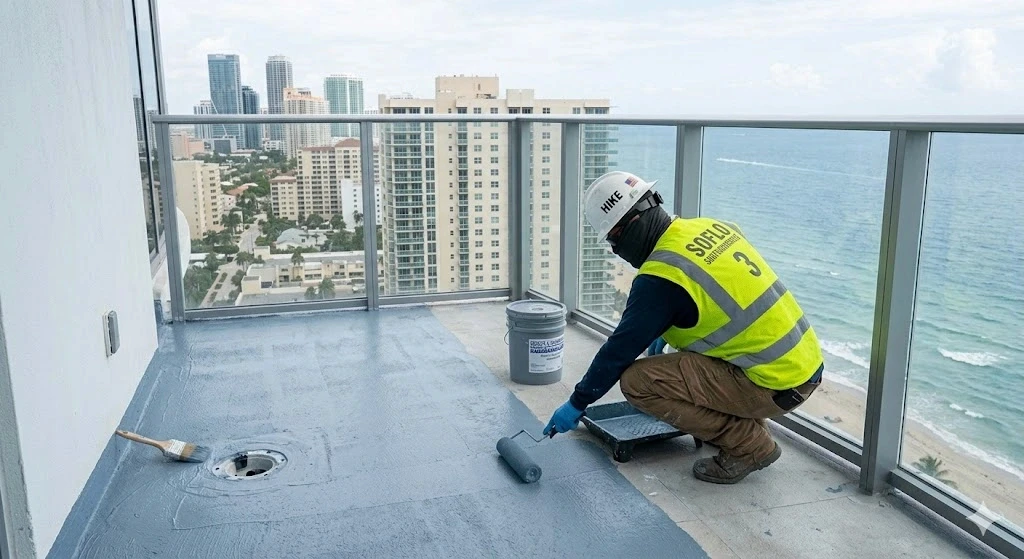
Balconies & Elevated Decks
Multi-layer polyurethane traffic membranes with perimeter cant strips and code-approved drip flashing.
Request Detailed Quote →A leaking roof in Florida means more than ceiling stains — it means moisture eating through insulation, decking, and structure. We seal roofs with systems built to handle the worst weather Florida throws at them.
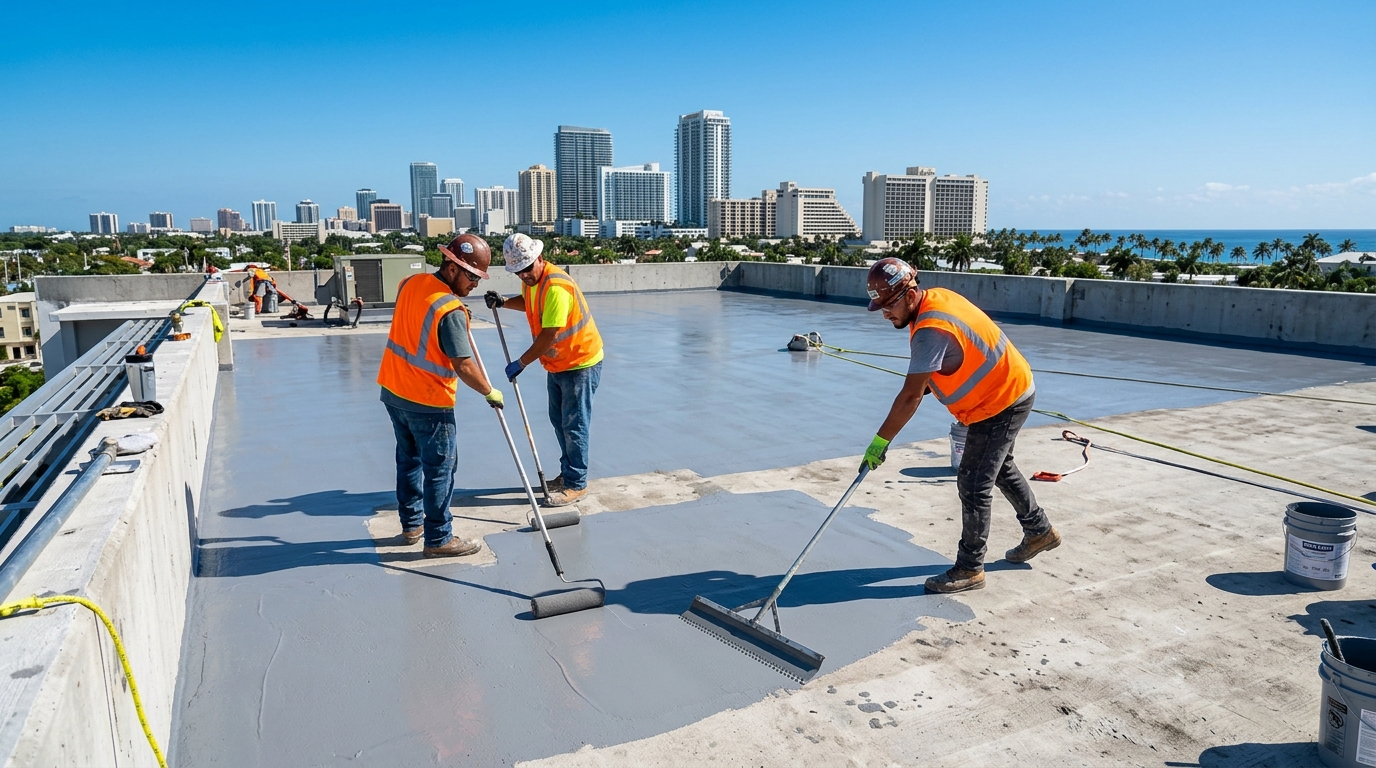
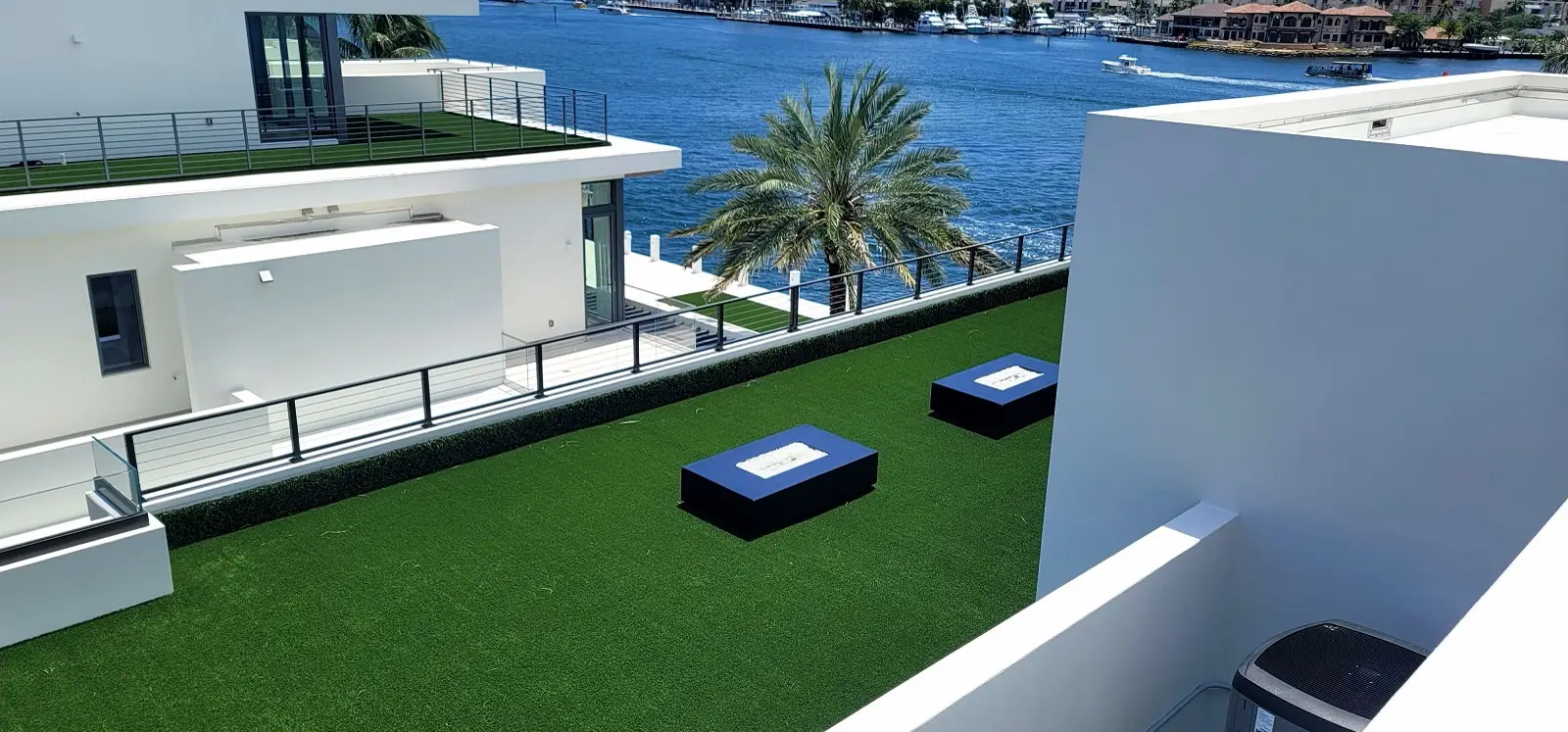
Roof waterproofing in Fort Lauderdale is a maintenance priority that no property owner can afford to defer. South Florida's roofs face more moisture, UV radiation, and storm event stress than almost anywhere else in the country — and a roof that isn't properly waterproofed will leak, damage interior finishes, accelerate structural deterioration, and produce the mold conditions that thrive in Fort Lauderdale's warmth and humidity. At Planet Construction FL, we install and maintain roof waterproofing systems for flat, low-slope, and pitched roofs throughout Broward County — stopping leaks and protecting the structures beneath.
Cold fluid-applied and PMMA systems cure seamlessly, eliminating lap-joint water entry points.
Diamond grinding and shot-blasting achieve ICRI CSP 3-4 anchor profiles for high-strength chemical bonding.
Single-source responsibility combining General Contractor (CGC1517295) and Roofing Contractor (CCC1329271) licenses.
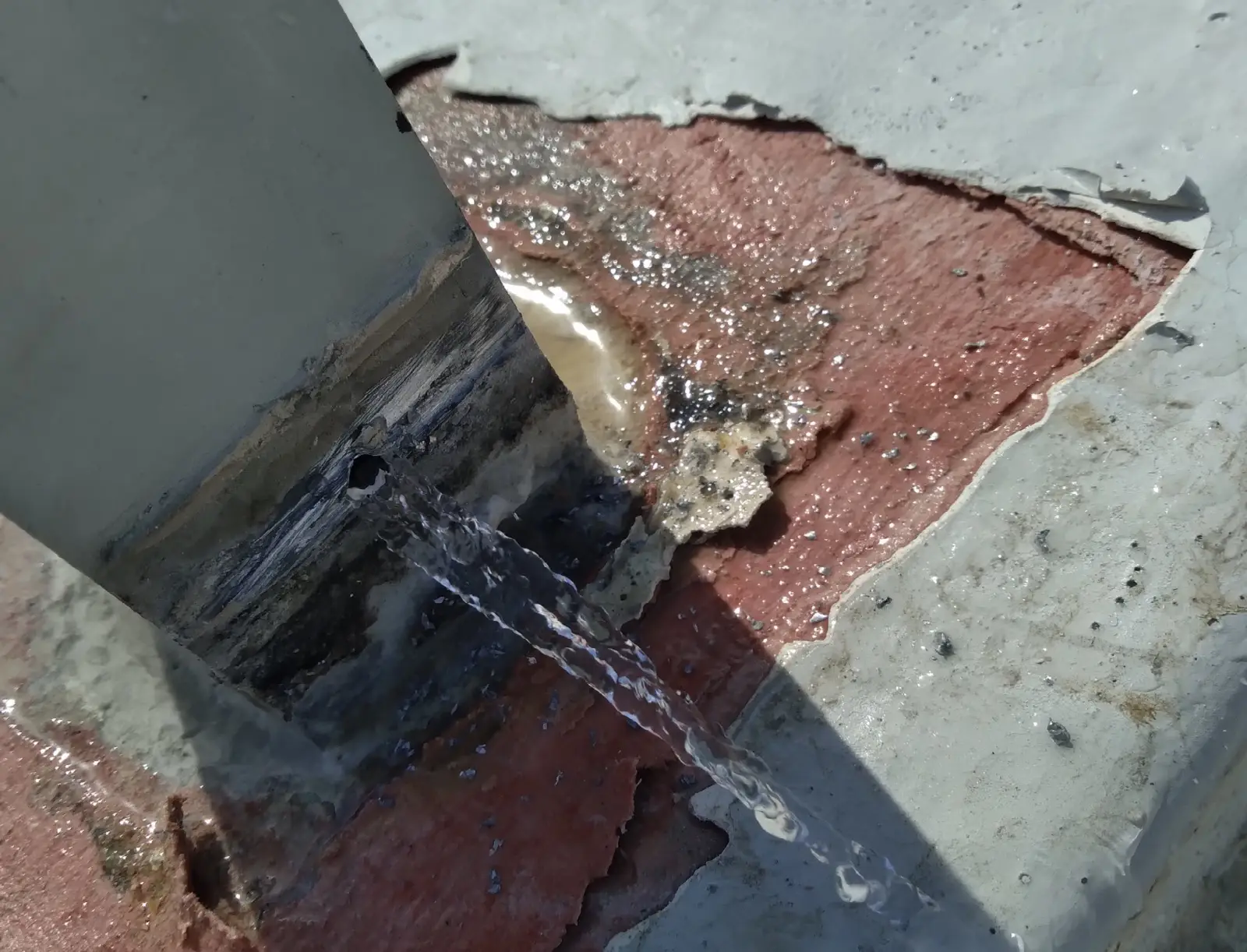
A leaking roof doesn't just stain drywall — water tracks through insulation, soaks decking, corrodes fasteners, and finds its way into walls and electrical systems. By the time the stain appears on your ceiling, the moisture has already been damaging the structure above for weeks or months. Patch jobs that miss the actual entry point just buy a few months before the next leak shows up somewhere else.
We trace the leak to its real source — flashing failures, membrane breaks, cracked seams, failed penetrations — and repair the cause, not just the symptom. Then we apply a roof waterproofing system matched to your roof type: elastomeric coatings for flat roofs, sealants and membranes for tile and metal, and full membrane systems for major exposures. Every job is documented for your records and warranty.
Roof waterproofing method selection depends on the roof type, slope, substrate condition, and performance requirements. Liquid-applied polyurethane membrane systems are the most versatile option for flat and low-slope roofs — they are seamlessly applied, self-terminating at penetrations, and highly resistant to UV degradation and ponding water. Elastomeric acrylic and silicone roof coatings extend the life of existing roofing membranes by restoring waterproofing performance and reflectivity. Modified bitumen overlay systems are used on roofs where the existing substrate is structurally sound but the weathering surface has failed. TPO membrane installations provide a fully adhered, heat-welded waterproofing layer with outstanding UV and chemical resistance for commercial flat roofs. Each system is specified for the specific roof condition — not a one-size-fits-all product push.
PEDESTRIAN TRAFFIC
Multi-layer polyurethane traffic membranes with perimeter cant strips and code-approved drip flashing.
Request Detailed Quote →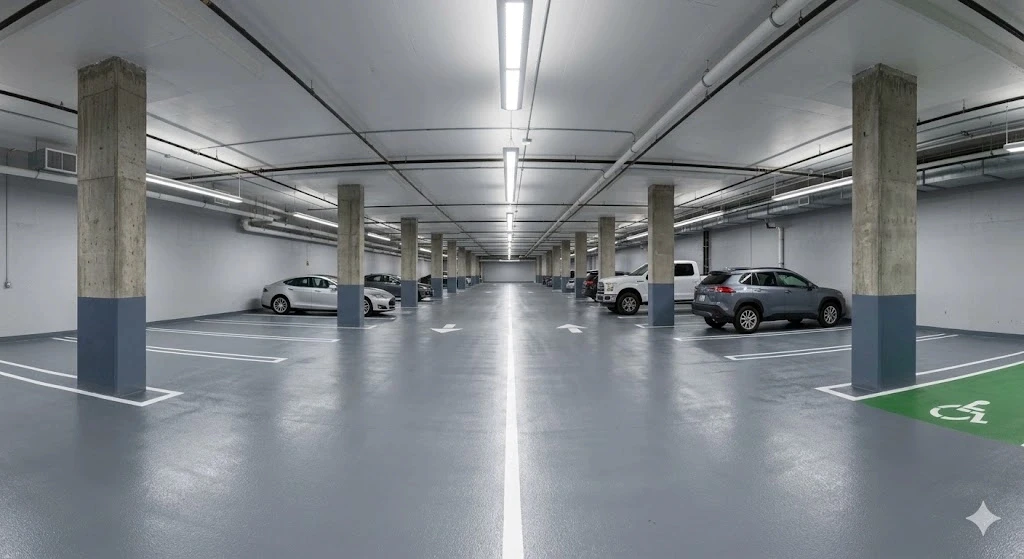 VEHICULAR TRAFFIC
Heavy-duty aggregate-filled elastomeric urethane systems resisting vehicular abrasion and chloride penetration.
View Garage Systems →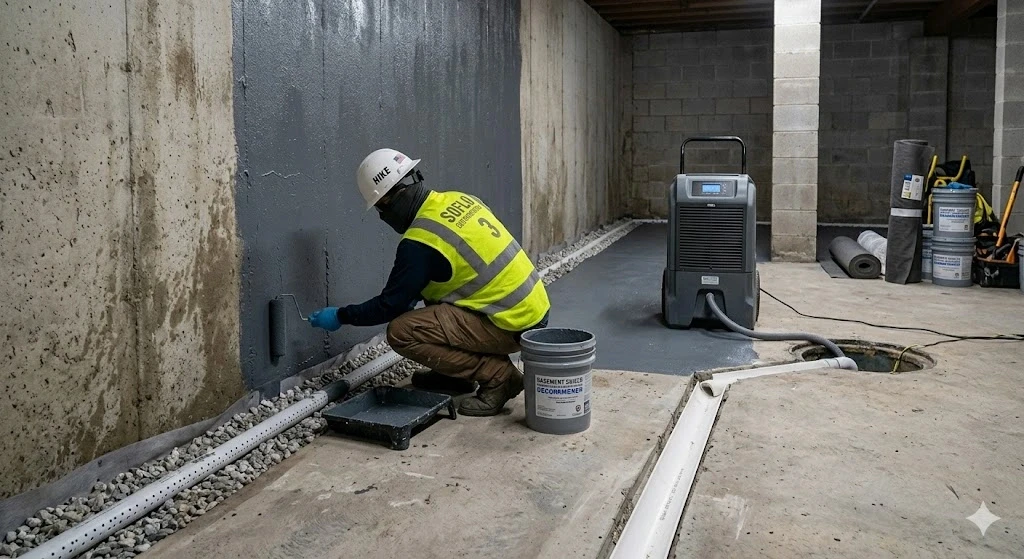 SUBTERRANEAN
Hydrostatic pressure barriers, bentonite sheets, and crystalline injection halting water table infiltration.
Inquire About Foundation →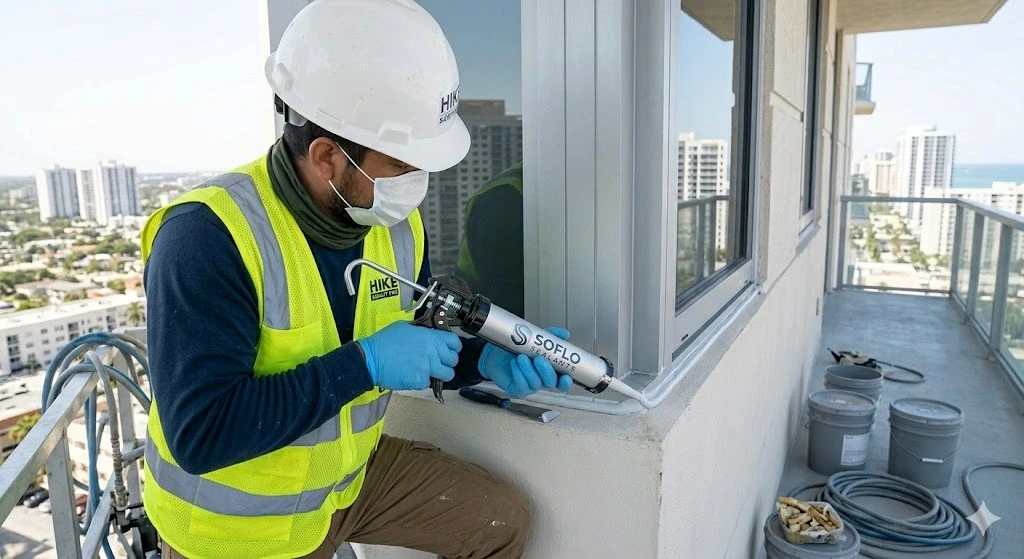 EXPANSION JOINTS
High-movement structural silicone and polyurethane joint sealants for window perimeters and wall transitions.
Explore Joint Sealants →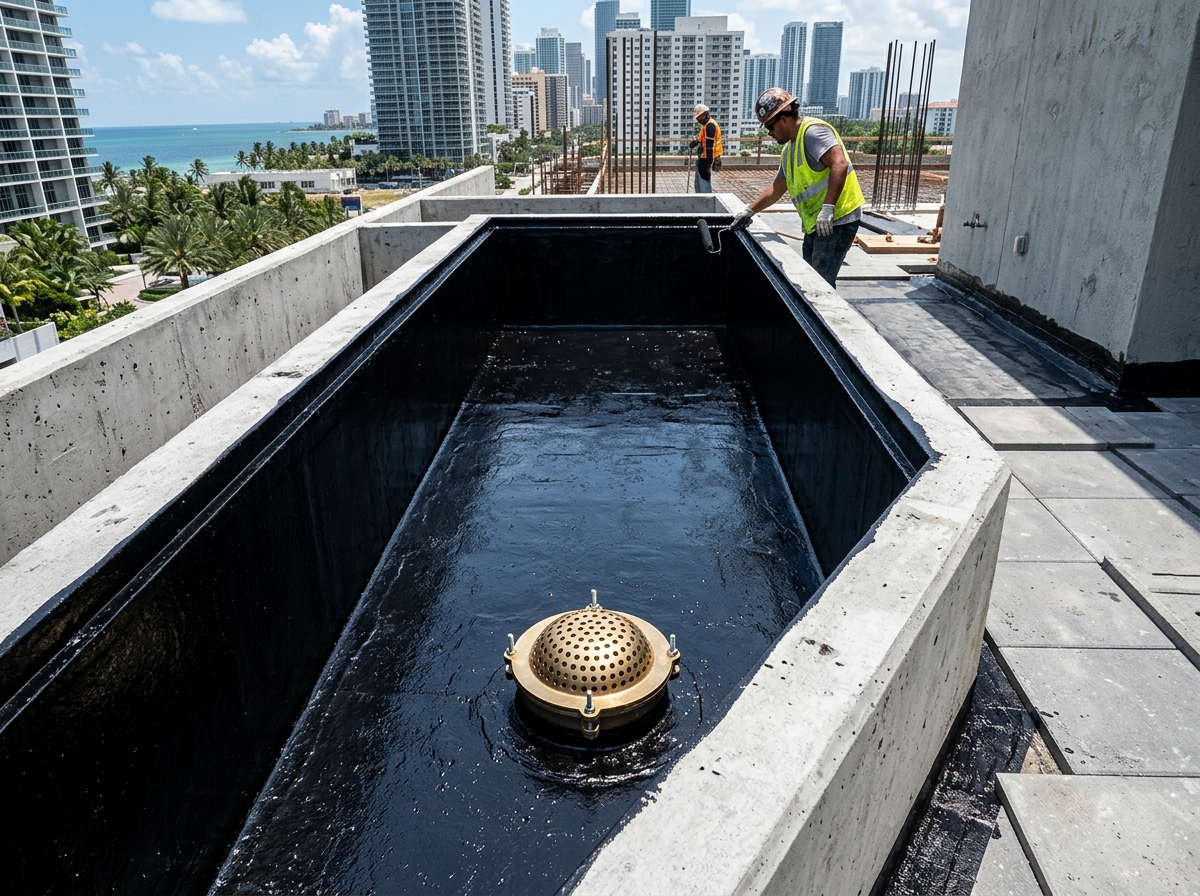 ROOT-RESISTANT
Root-barrier membranes, drainage boards, and internal flashing terminating soil moisture migration.
Inquire About Planters →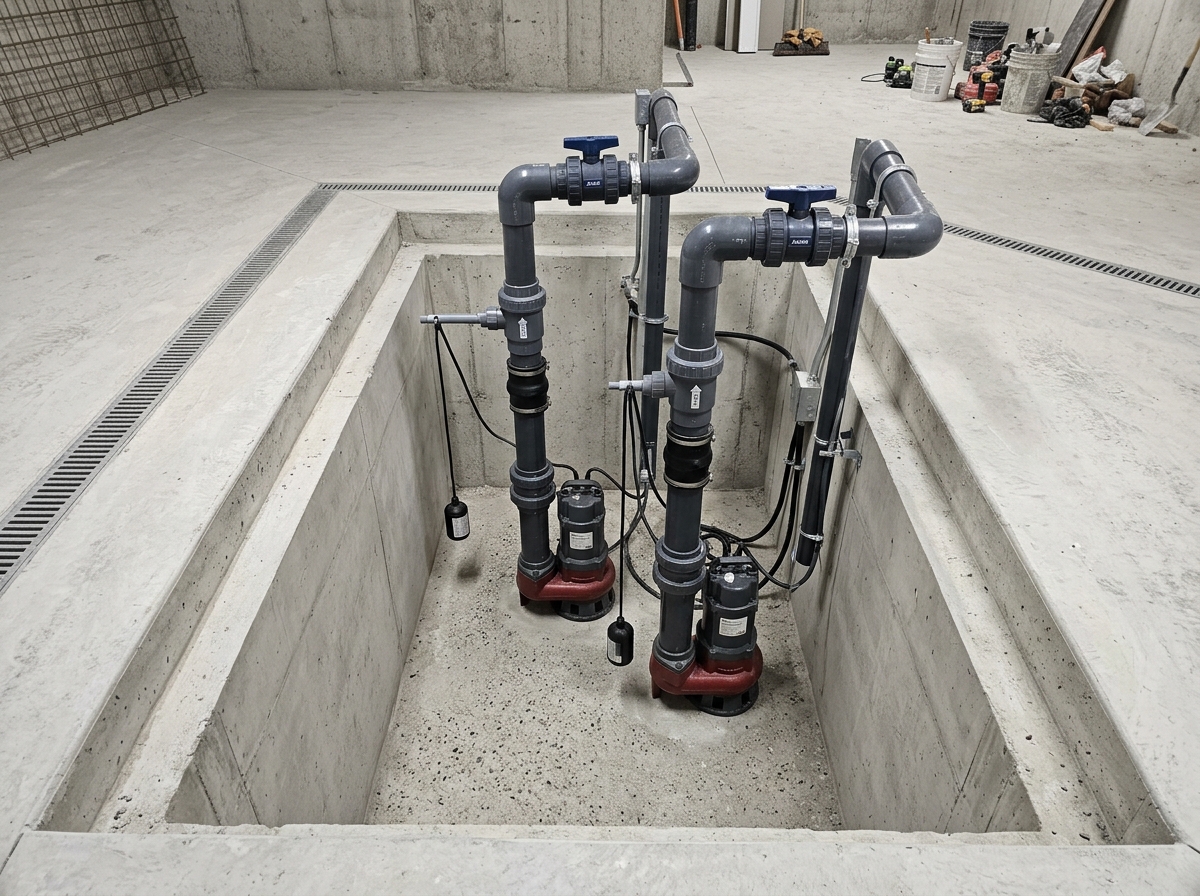 DRAINAGE RELIEF
Commercial cast-iron sump assemblies and perforated gravity drain lines protecting basement and slab levels.
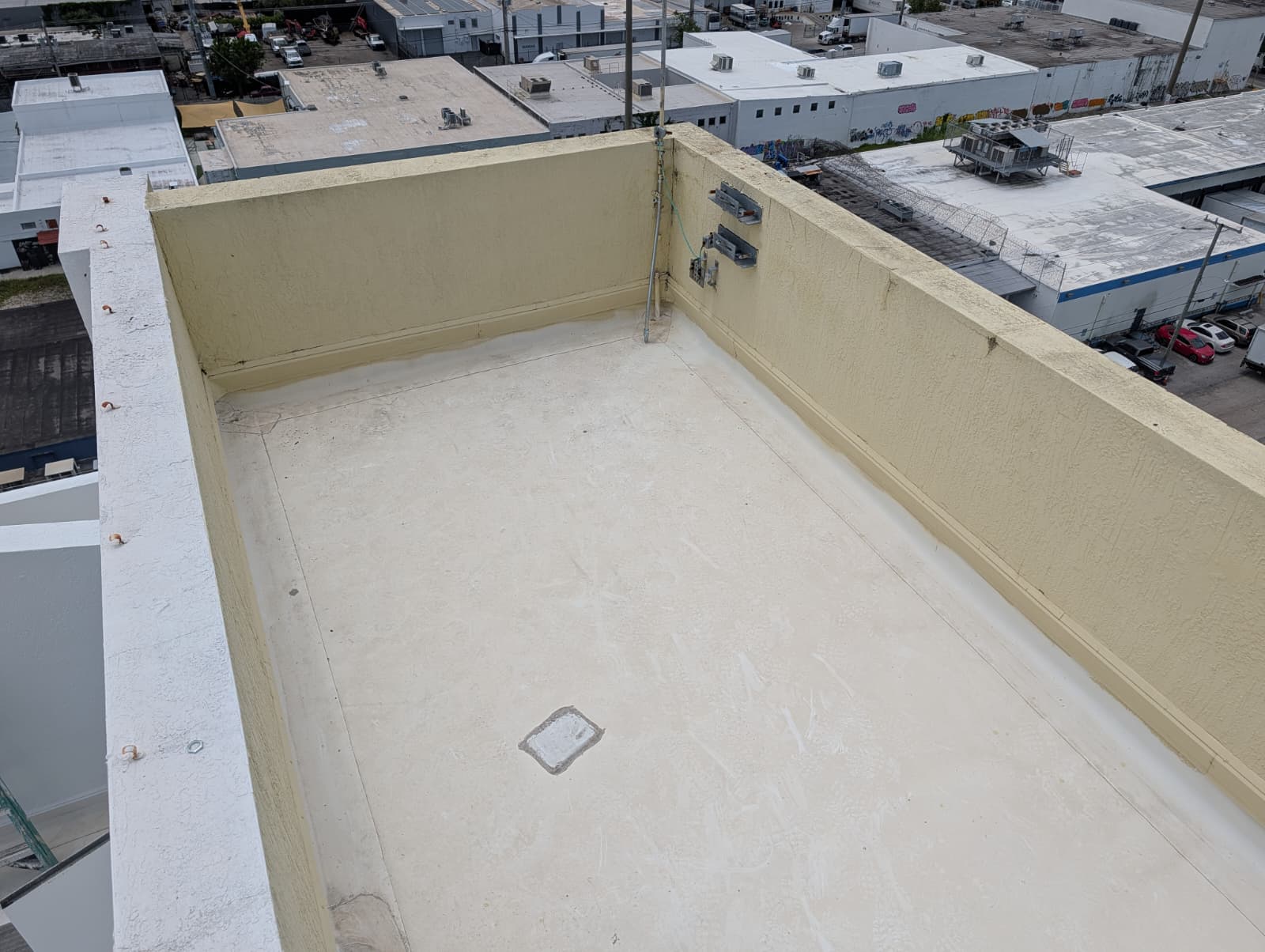
Request Drainage Bid →Flat and low-slope roofs are the dominant roof type on Fort Lauderdale's commercial and multi-family buildings — and they are also the most waterproofing-intensive roof type in South Florida's climate. Ponding water — water that accumulates in low spots and remains after a rain event — is the primary enemy of flat roof waterproofing systems. Standing water accelerates membrane degradation, enters at every lap seam and penetration, and in South Florida's warmth becomes a breeding environment for biological growth. Proper drainage slope, functioning roof drains, and a fully adhered or fully sealed membrane are the three elements that make flat roof waterproofing perform in Fort Lauderdale. Planet Construction FL addresses all three in every flat roof waterproofing engagement.
Roof waterproofing coatings are applied over an existing roof surface and restore waterproofing performance at a fraction of full roof replacement cost. They are appropriate when the existing roofing substrate is structurally sound and well-adhered — just weathered and losing its waterproofing capability. Roof membrane systems — either fully adhered sheet membranes or liquid-applied membranes — provide a new, independent waterproofing layer and are appropriate when the existing surface has failed or when new construction requires a complete waterproofing assembly. The choice between coating and membrane is made during the condition assessment based on the existing roof's physical state. Planet Construction FL will always recommend the approach that provides the best long-term value — including being honest when a coating is a short-term fix on a substrate that needs full replacement.
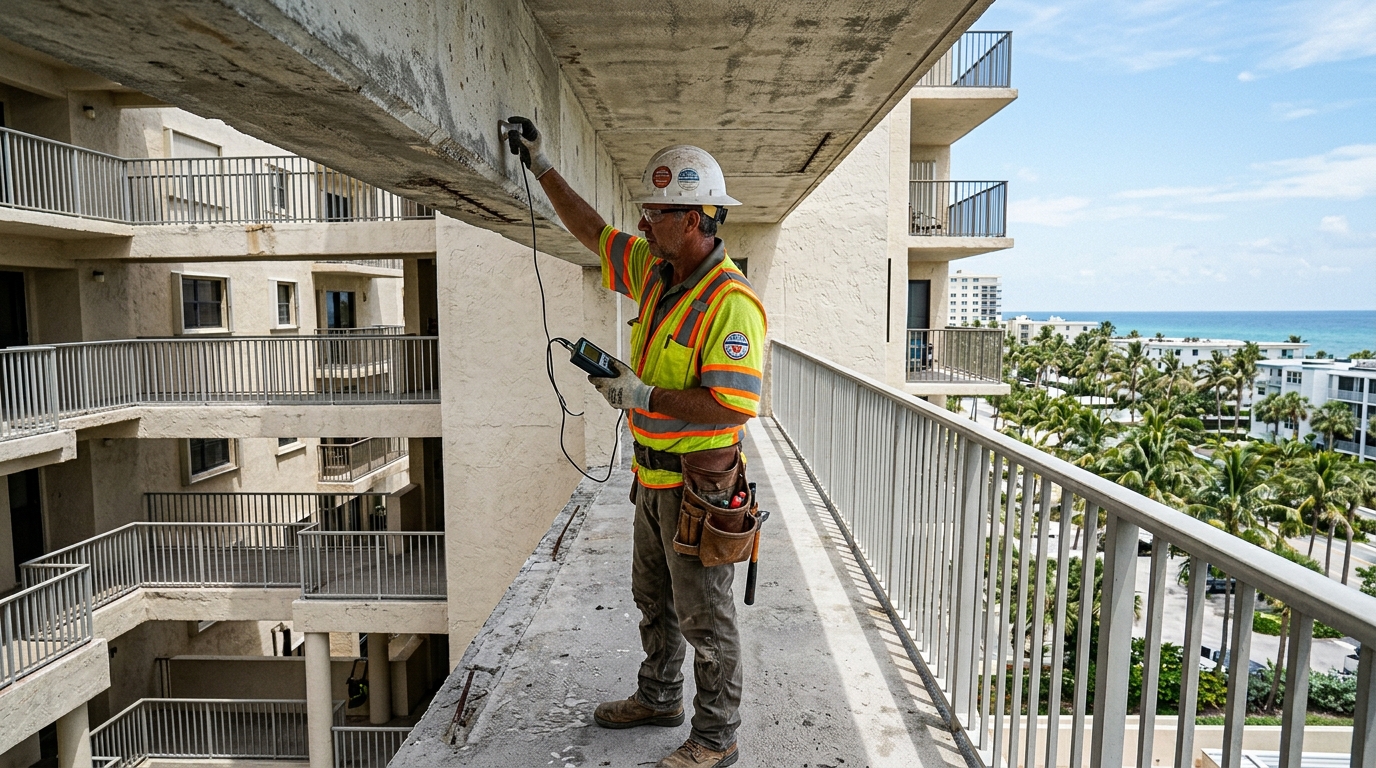
Acoustic hammer sounding for hidden delaminations, diamond grinding to CSP 3-4, and concrete crack routing.
Chipping spalls, treating corroded steel, forming perimeter cove seal fillets, and detail-flashing all drains.
Two-component epoxy moisture barrier primer penetrating concrete pores to eliminate outgassing and maximize pull-off strength.
High-build elastomeric membrane basecoat, reinforced fiber scrim, and aggregate-broadcast UV topcoat for non-slip protection.
Fort Lauderdale's roofing environment tests waterproofing systems in ways that northern climates never experience. UV radiation at South Florida's latitude degrades polymer-based coatings and membranes significantly faster than in northern markets — UV-stable formulations are mandatory, not optional. Thermal cycling from 180°F surface temperatures under direct sun to rapid cooling during afternoon thunderstorms creates expansion and contraction stresses that challenge every seam and lap joint. Hurricane-season wind events create uplift pressures that stress membrane adhesion and can introduce water at any unanchored edge detail. Salt air from the Atlantic degrades certain membrane materials over time. Planet Construction FL specifies roofing products with proven South Florida performance histories and installs them with details engineered for the specific challenges of Broward County's coastal climate.
Phased construction logistics, resident notices, reserve study alignment, and direct engineer of record milestone recertification sign-offs.
Engineering-compliant high-performance traffic membranes, structural joint sealants, and building envelope moisture defenses across Broward and Palm Beach counties.
Multi-layer polyurethane pedestrian traffic membrane, cove perimeter detailing, and non-slip wear course over 48 residential units.
Shot-blast surface profiling, heavy vehicular urethane membrane application, and reflective stall restriping over 4 levels.
Post-tension cable pocket sealing, railing post embedment waterproofing, and fluid PMMA elastomeric deck coating.
Direct answers on membrane longevity, inspection protocols, resident coordination, and warranty coverage across South Florida.
If the existing roofing membrane or surface is structurally intact, well-adhered, and showing only surface weathering and minor coating loss, waterproofing coating or overlay is typically cost-effective. If the membrane is blistering, delaminating, has widespread lap seam failures, or the insulation beneath is water-saturated, full replacement is more appropriate. Planet Construction FL assesses existing roof condition honestly before recommending coating or replacement — we core sample suspected wet insulation and perform adhesion testing to confirm substrate suitability for coating.
A coating application on a 5,000 square foot flat roof typically takes 2–3 days including surface preparation and two coating applications. Liquid-applied membrane systems take 3–5 days. Both require adequate dry weather for application — we monitor Fort Lauderdale's weather patterns and schedule work around the afternoon thunderstorm patterns that are predictable during rainy season.
Yes — roof waterproofing is performed on the exterior of the building with no interior access required. There is typically no disruption to building occupants beyond noise from equipment on the roof. Some coating products have low VOC content suitable for occupied buildings; we specify low-odor products where proximity to occupied spaces makes this a concern.
Quality elastomeric roof coatings last 10–15 years in South Florida's climate before recoating is needed. Fully adhered membrane systems last 15–25 years. Annual roof inspection — checking drains, penetrations, and seams — is the best maintenance practice. Catching small failures at penetrations or seams early and resealing them prevents the water infiltration that shortens overall system life dramatically.
Request a comprehensive moisture diagnostic, membrane pull-off test, or turnkey board proposal. We provide detailed line-item bids backed by dual state contractor licenses.